From The Vault:

Volume 5 Number 3 – Summer 2025

A NOTE FROM YOUR DISTRICT HISTORIAN

Greetings friends of the Illinois District!

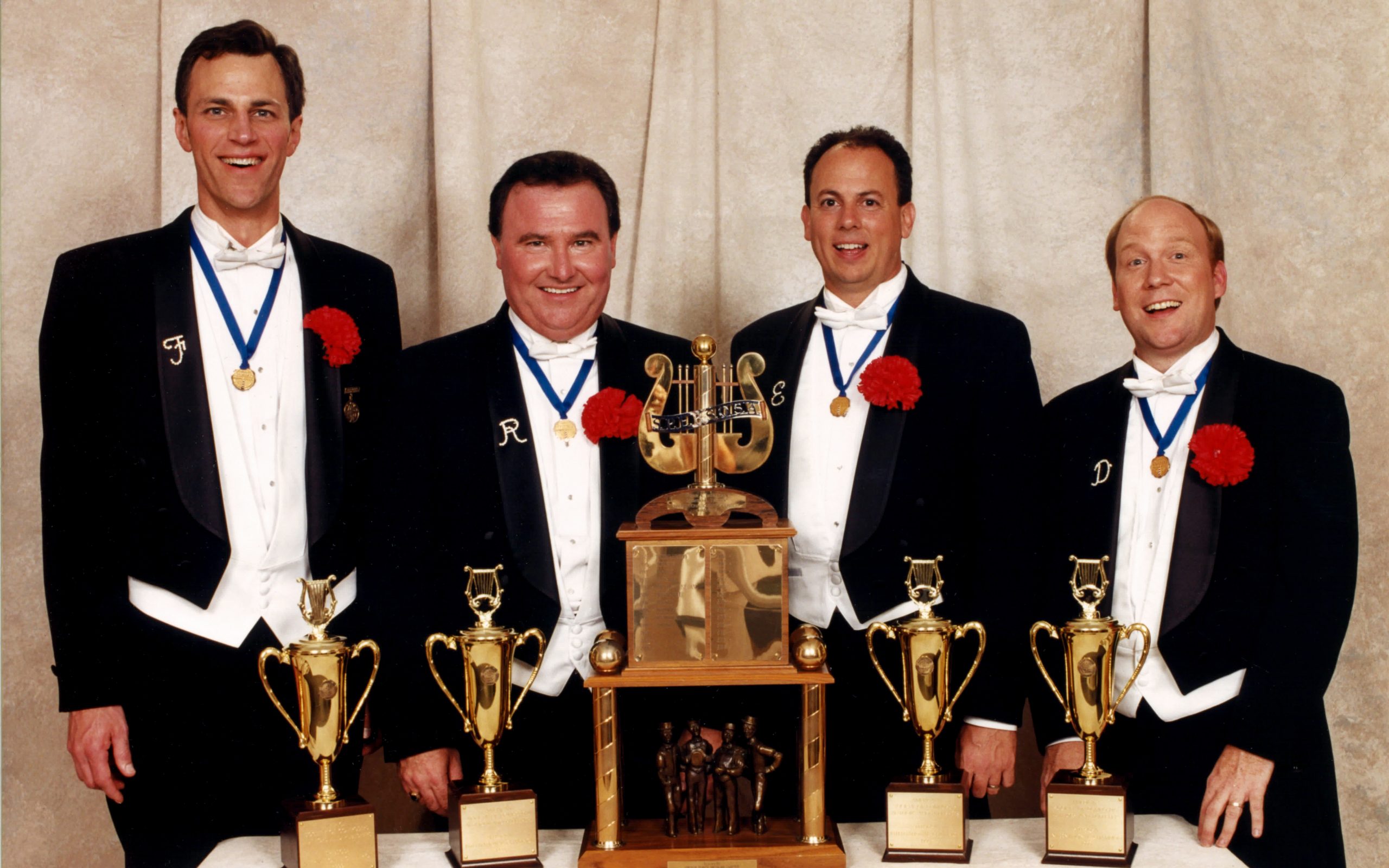
Well it has certainly been a HOT summer for most of us – so here is some refreshing barbershop history to quench your thirst.  In this issue, we honor the legendary “Buzz” Haeger, tenor of the Four Renegades.   This year marks the 60th anniversary of the international championship won by that quartet.  In addition, we turn the clock back a half-century to spotlight our 1975 District Champs – The Federal Reserve Notes.  We also take a look at a popular barbershopper who got his start right here in Illinois, plus explore a unique artifact from the archives that some of you may remember.  One of our youth quartets that went on to win the district championship in 1950 is highlighted and we round out this issue with a 1990s recording from a popular downstate foursome.

My thanks to Bob Squires, whose diligent record-keeping over the years made information gathered for this issue go much quicker.  I would also like to thank Mike Mueller (son of Eldred Mueller, tenor of The Federal Reserve Notes) who provided valuable information about his dad’s quartet that had been absent from the archives.

Looking forward to our fall convention in a couple of months!

Until then…Enjoy!

Rich Hansen

Illinois District Historian

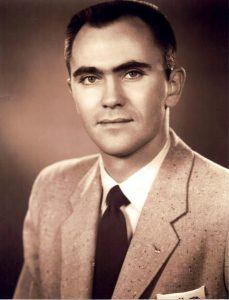
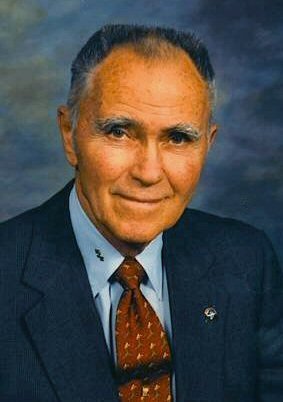
Warren "Buzz" Haeger

BARBERSHOP ICON

(Adapted from an article written by Grady Kerr for the Barbershop Wiki Project and Buzz Haeger’s personal recollections from the archives)

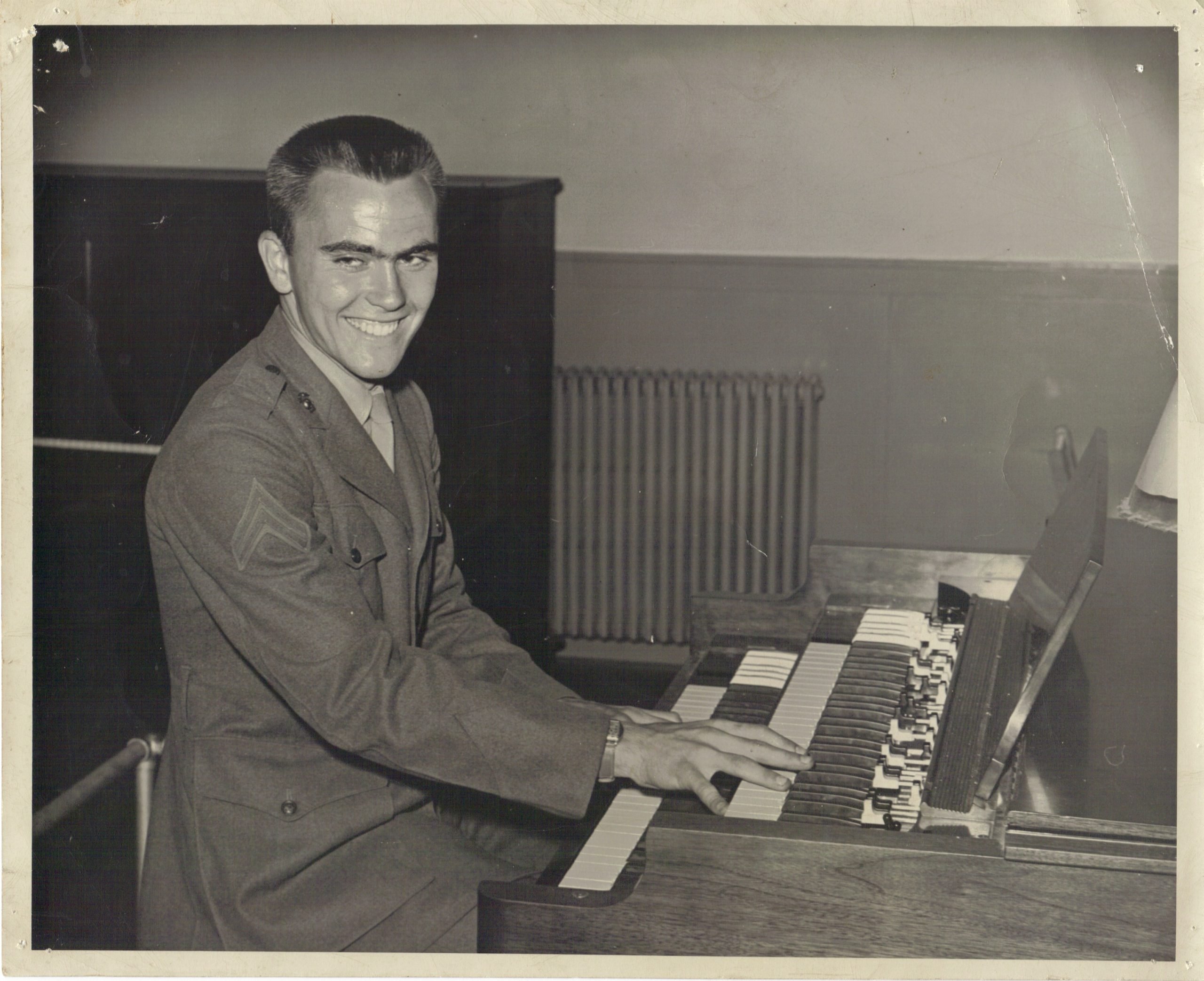
Warren John “Buzz” Haeger was born October 24, 1925 at the West Suburban Hospital in Oak Park, Illinois.  He grew up in LaGrange and attended public schools until his second year of high school when he transferred to Western Military Academy in Alton, Illinois. He graduated in 1943, enrolled at Purdue University, and was drafted soon afterwards.

While in the service, Buzz played baritone saxophone with, and arranged music for, the Halls of Montezuma Marine Corps Band. He had occasion to work with many different professional musicians and stars, including Frank Sinatra, Mel Tormé, Bob Hope, Debbie Reynolds, Donald O’Connor, Ava Gardner, the Alvino Ray Orchestra, and Artie Shaw Band.

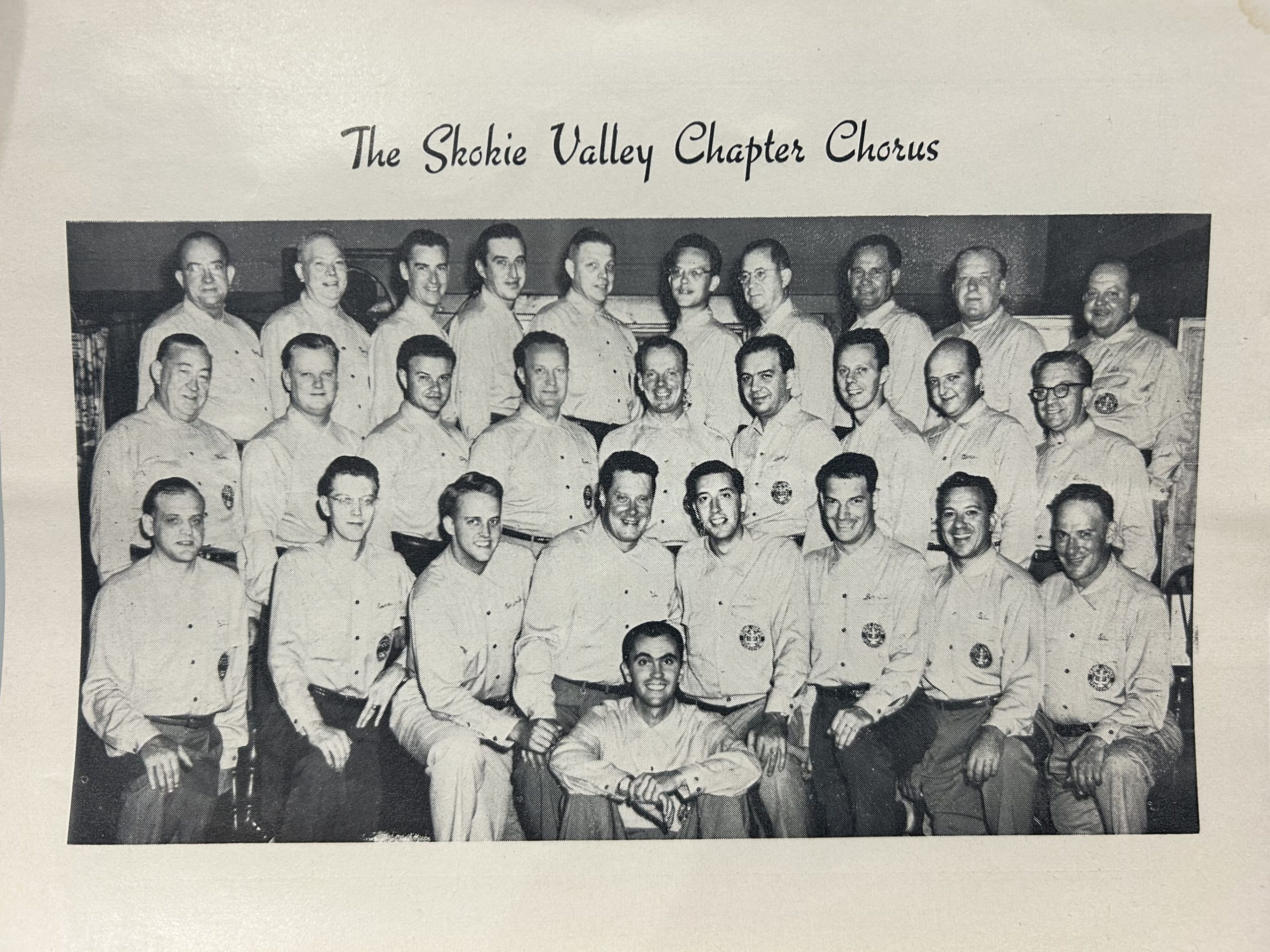
In 1945, a barbershopper from San Diego encouraged him to go and listen to some guys who were getting a chapter together. After attending, Buzz fell in love with barbershop singing and joined the group.  While finishing his education at Purdue University, Buzz joined the West Lafayette, IN Chapter and sang with a quartet called The Playtonics.  After returning home, Buzz began directing the new Skokie Valley Chapter.  It was while he was singing with the Q-Suburban Chapter that he got recruited to sing with The Four Tissimos – a group that later went on to win the Illinois District championship in 1954 and garnered a third place finish at the 1955 international competition in Miami. (See FTV Summer 2023 Issue)

It was around this time that Buzz met the love of his life, Jean.  They were married in December of 1957 and had two children together, Diane and Mark.  Even though his barbershop hobby kept him on the road most weekends, he cared deeply for his wife and kids and was an outstanding provider for his family.

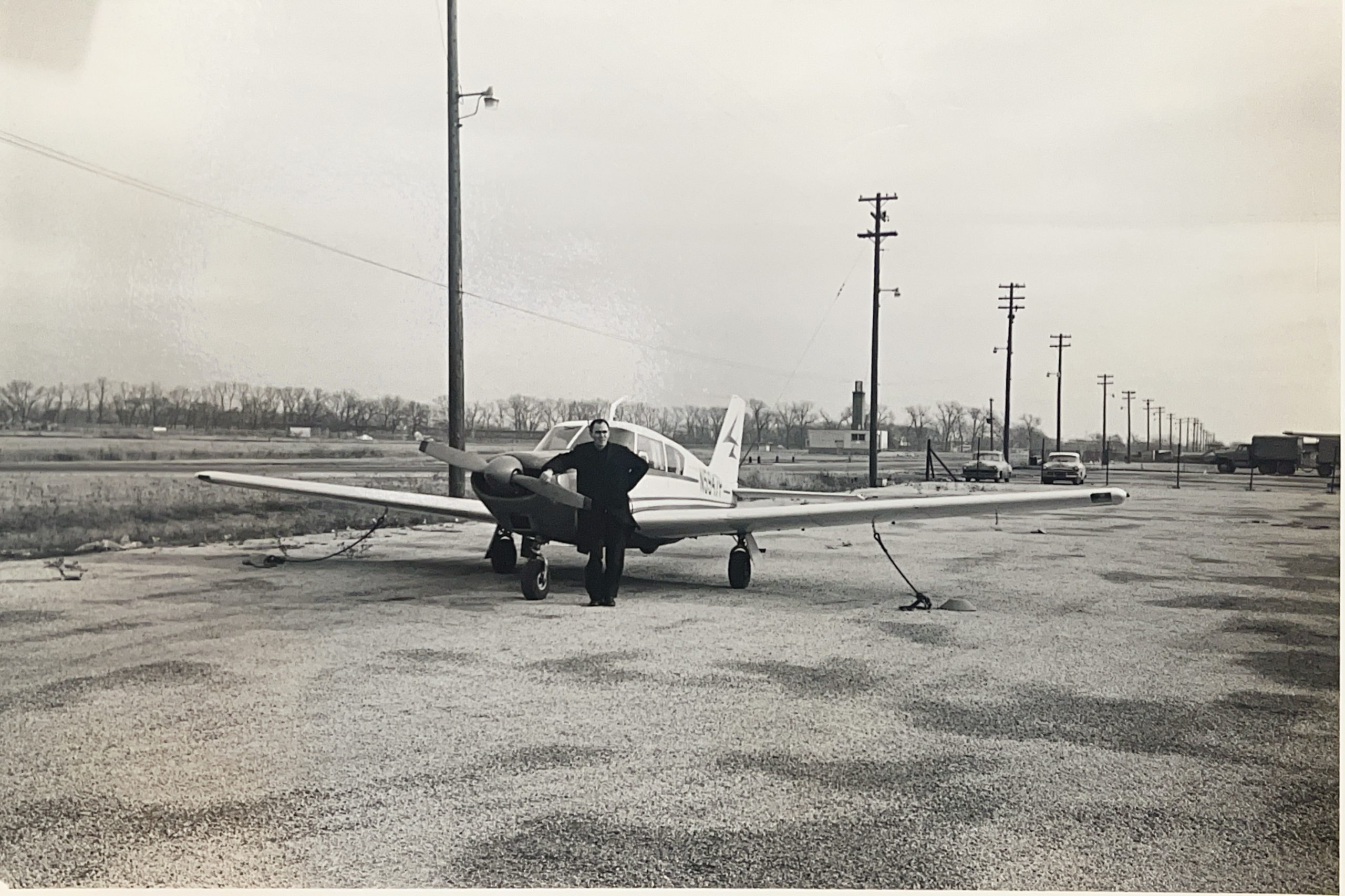
Buzz was a businessman, a sailor, a truck driver, a pilot, an auxiliary police officer, movie theater projectionist, golfer, and baseball player.  He even worked for the Aurora and Elgin Railroad, switching cars.  Buzz went out on his own to start a real estate company called Indust-Realty, Inc. and became an industrial real estate broker.  Musically, he was even more versatile. He was an organist, guitarist, played clarinet, flute, and saxophone.  He even formed a sax quartet called the Sax Maniacs – of course they played Buzz’s four part arrangements, many of which were created for the Dapper Dans of Disneyland.

A passionate barbershop singer, gifted arranger, director, coach, and emcee, Buzz also held the distinction of being the youngest international competition judge – he was only 23!  He wrote over 300 barbershop and modern vocal arrangements. A serious musician, Buzz had perfect pitch, and always “heard” the entire arrangement in his head before he put it down on paper.

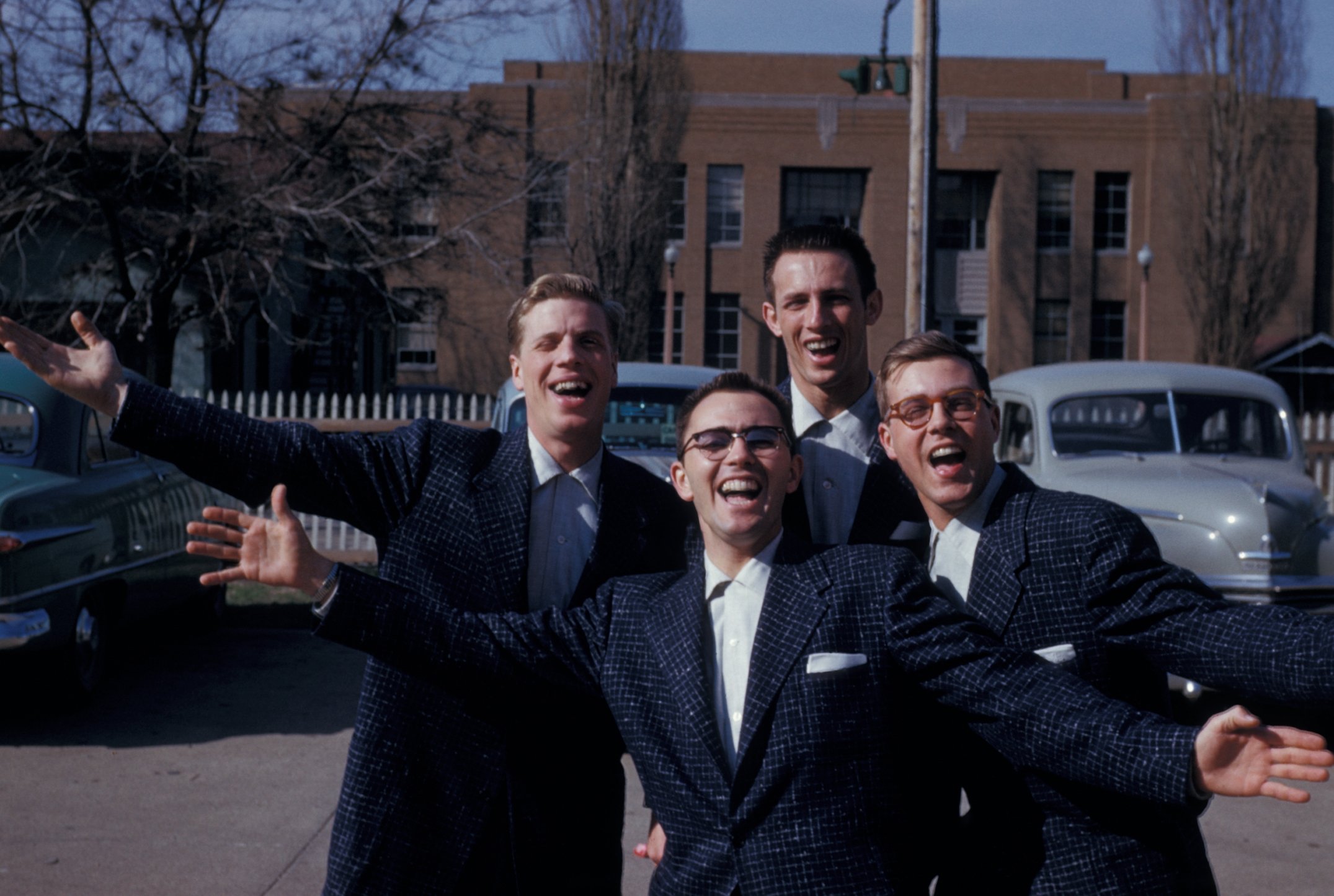
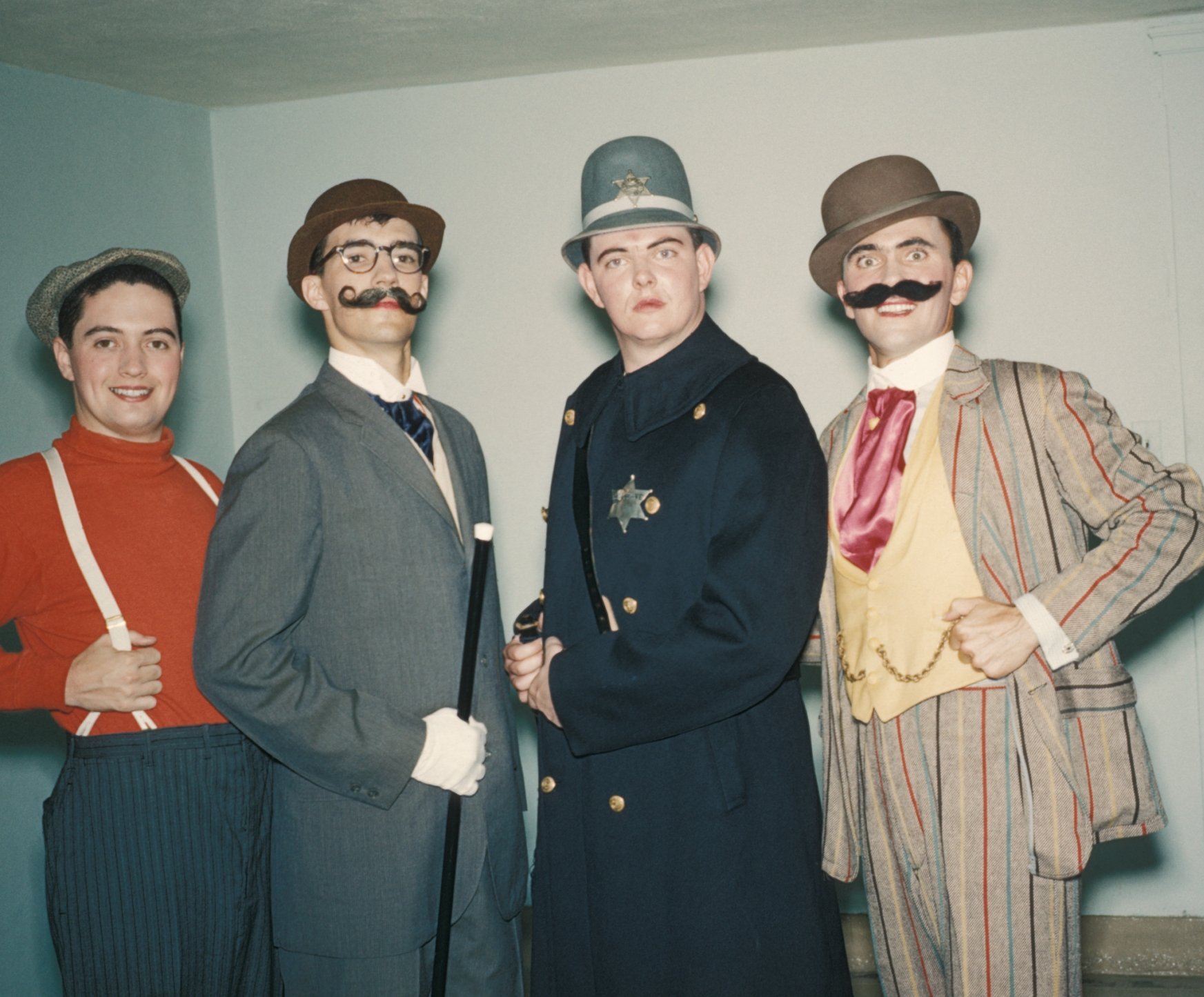
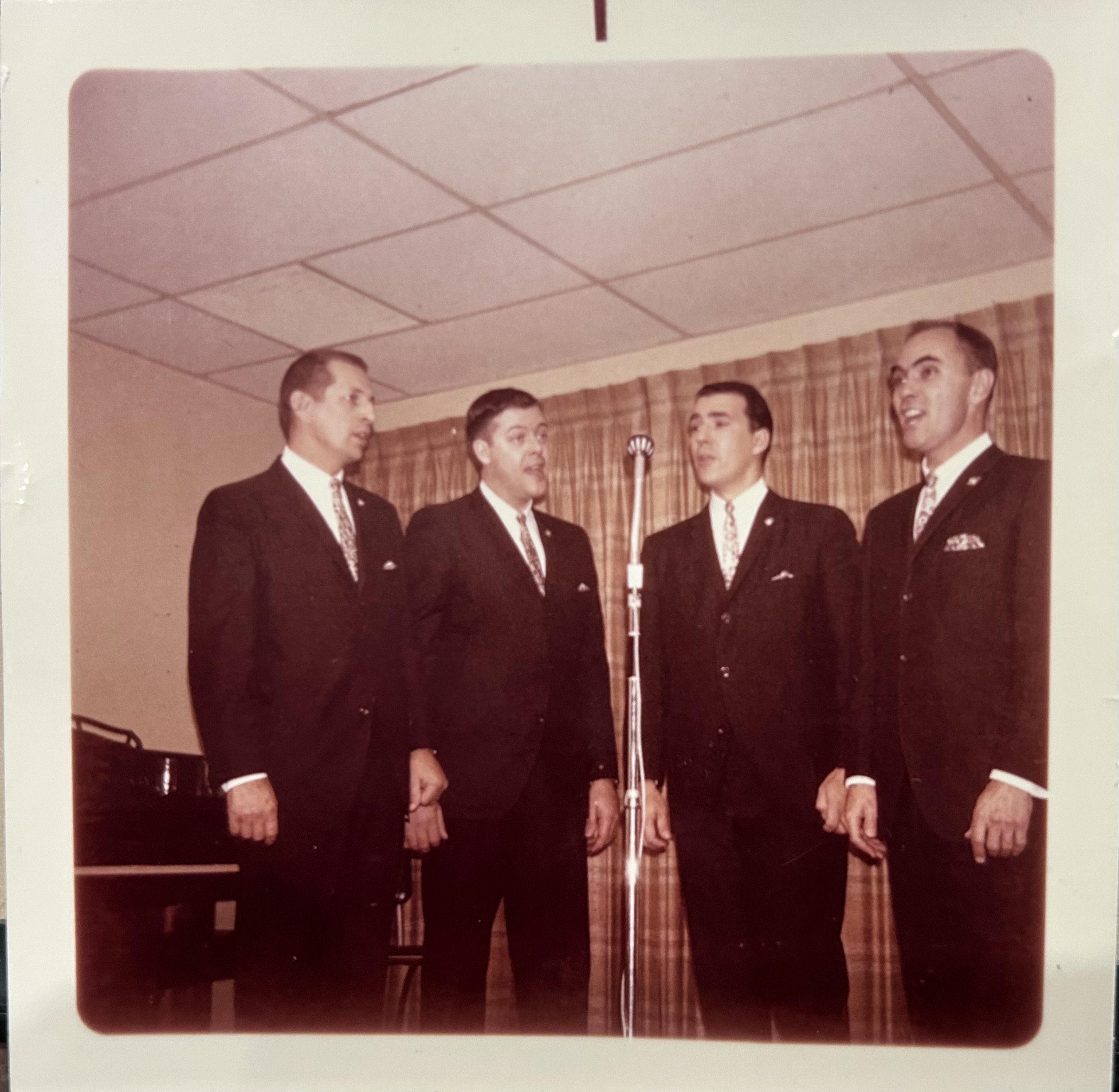
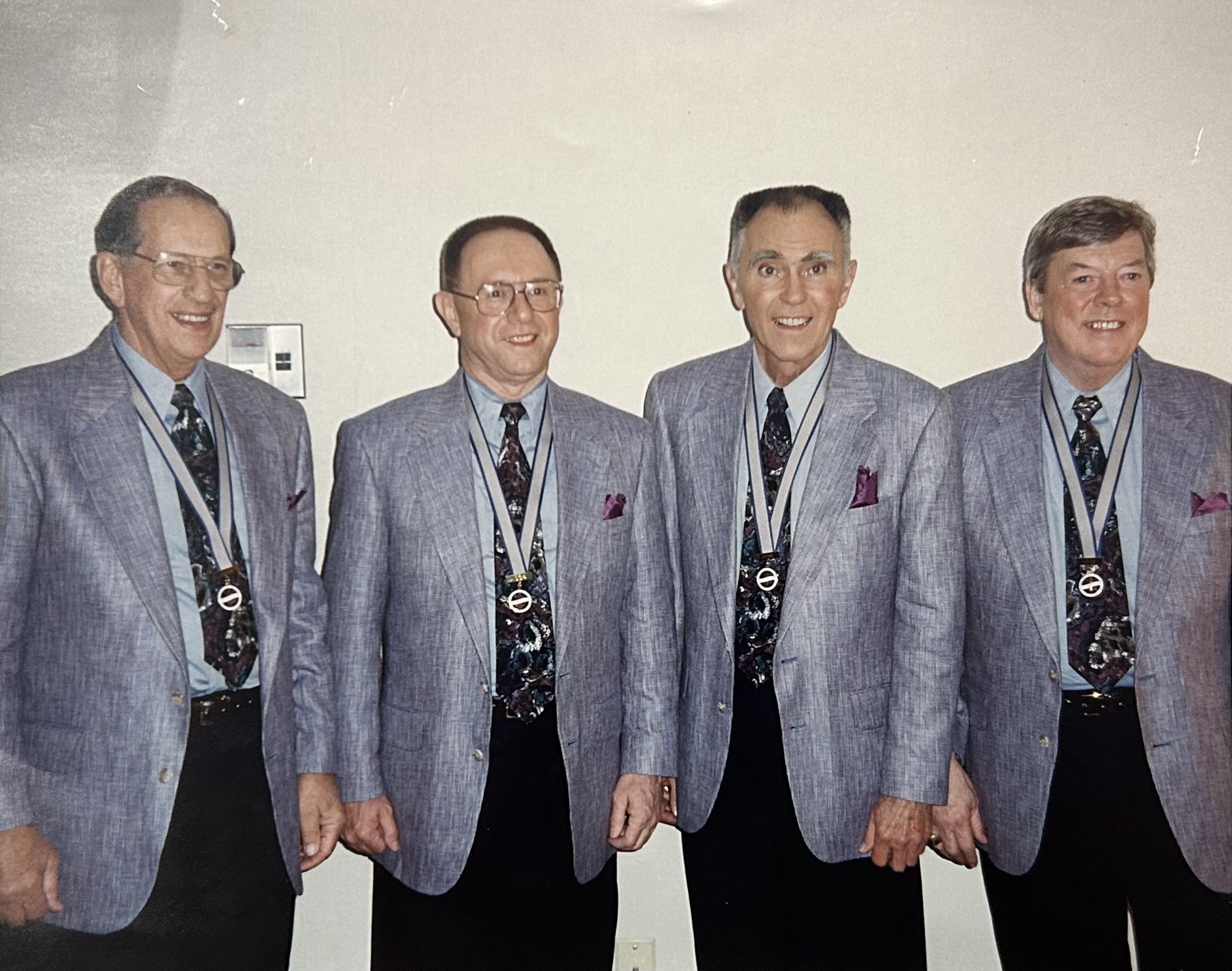
Buzz was an international quartet medalist earning four medals in his seven appearances – all top ten – prior to winning his gold medal in Boston in 1965 as the tenor of The Four Renegades.  The quartet performed more than 1000 shows and went on several USO tours where they entertained at hospitals, particularly in contagious wards.

Four-part harmony ran strong in the Haeger family.  Buzz’s brother Bob “Moose” Haeger was an active quartet man and sang with the 1949 Illinois District championship quartet, Barber-Q-Four.  Buzz’s sister, Phyllis, got her gold medal with the 1955 Queens of Harmony, The Nota-belles (She always enjoyed reminding him she got hers ten years before he did!)  Buzz won his second international gold in 1994 as a senior competitor in The New & Improved Industrial Strength Mini-Chorus.

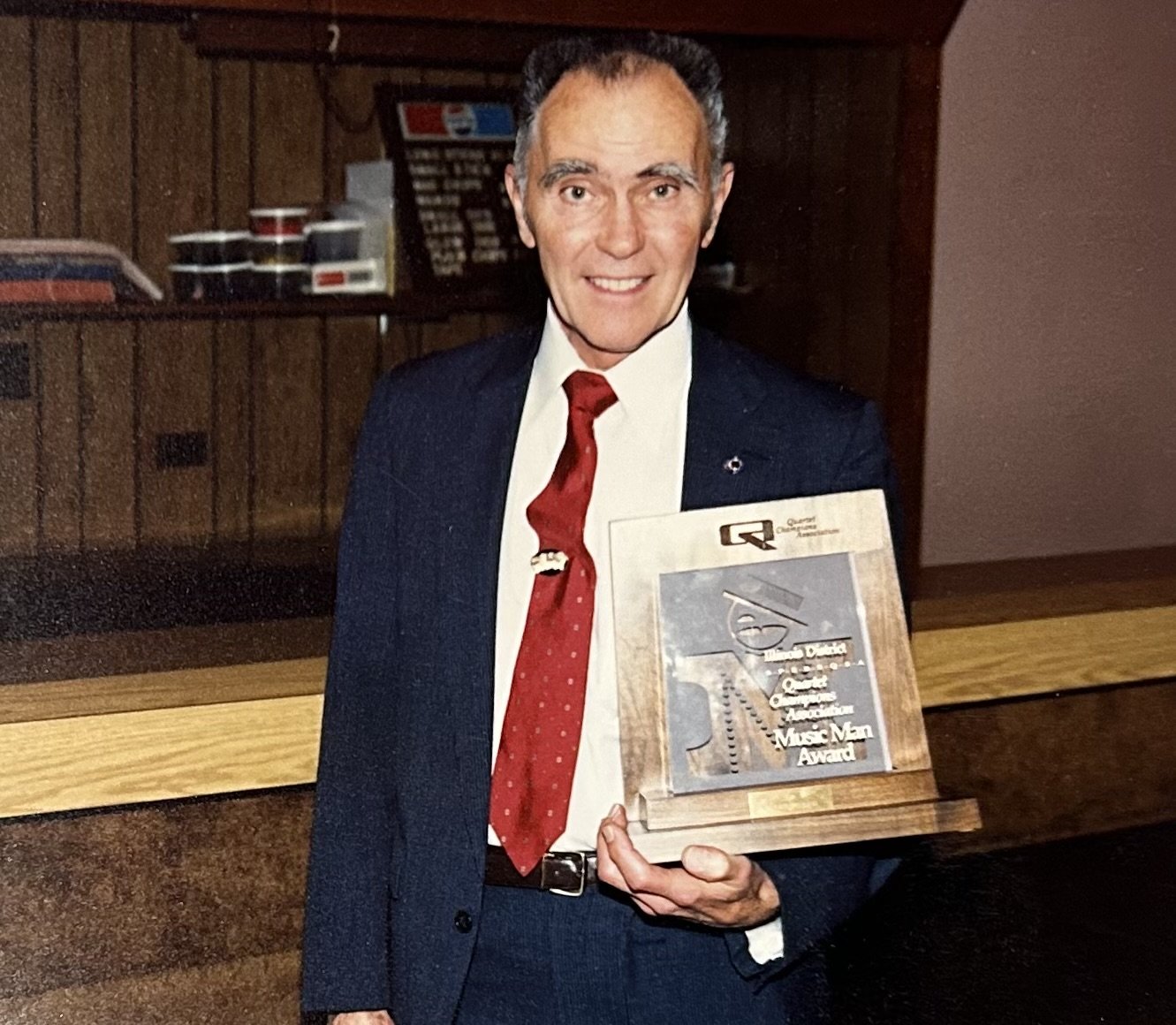
Buzz was recognized in the Illinois District as an A.B.E. (Award for Barbershop Excellence) winner.  Likewise, he was the first recipient of the QCA’s “Music Man” Award in 1992.  Buzz was also named to the Barbershop Harmony Society’s Hall of Fame in 2005 and given the 2006 Association of International Champions (AIC) President’s Award.

He was a major and generous supporter of the Youth in Harmony program for the Barbershop Harmony Society and specifically for the Illinois District.  In his own recollections, Buzz stated that the legacy he would like to leave is “to be able to go to the schools and show the kids what barbershop is all about.  I was one of the lucky ones because I discovered it in my teens.”  To that end, a traveling trophy was created in Buzz’s honor that is annually bestowed on the winner of the district’s high school quartet competition.  

Buzz passed away on Saturday, November 3, 2007 at the age of 82 near his home in Oak Brook, Illinois.  A memorial service was held November 17 with well over 100 barbershoppers filling the overflowing choir loft.  Hundreds of family, barbershop, and business friends gathered to pay tribute to their dear friend.

Buzz could do it all – sing every part, arrange it, judge it, coach it, direct it, and was perhaps the greatest woodshedder of all time. He had a keen memory and knew more songs than most other barbershoppers.  Buzz often taught not intros or tags, but … “middles”.  

For those of us that were lucky enough to sing a tag (or a “middle”) with Buzz, it is a cherished memory of a man who is a legend within the Barbershop Harmony Society.  Perhaps his good friend Jim Bagby said it best upon his passing – “Rest in peace, Buzz – there will never be another one like you.”
 

QCA Spotlight

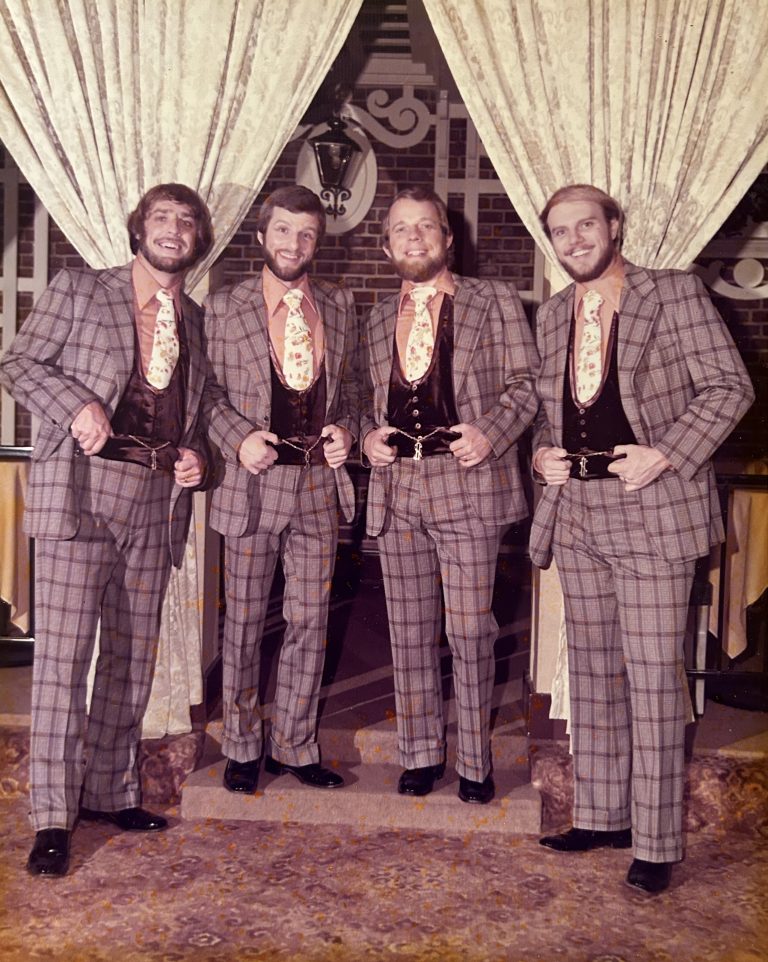
FEDERAL RESERVE NOTES (1975)

Federal Reserve Notes

(taken from personal recollections by Mike Mueller)

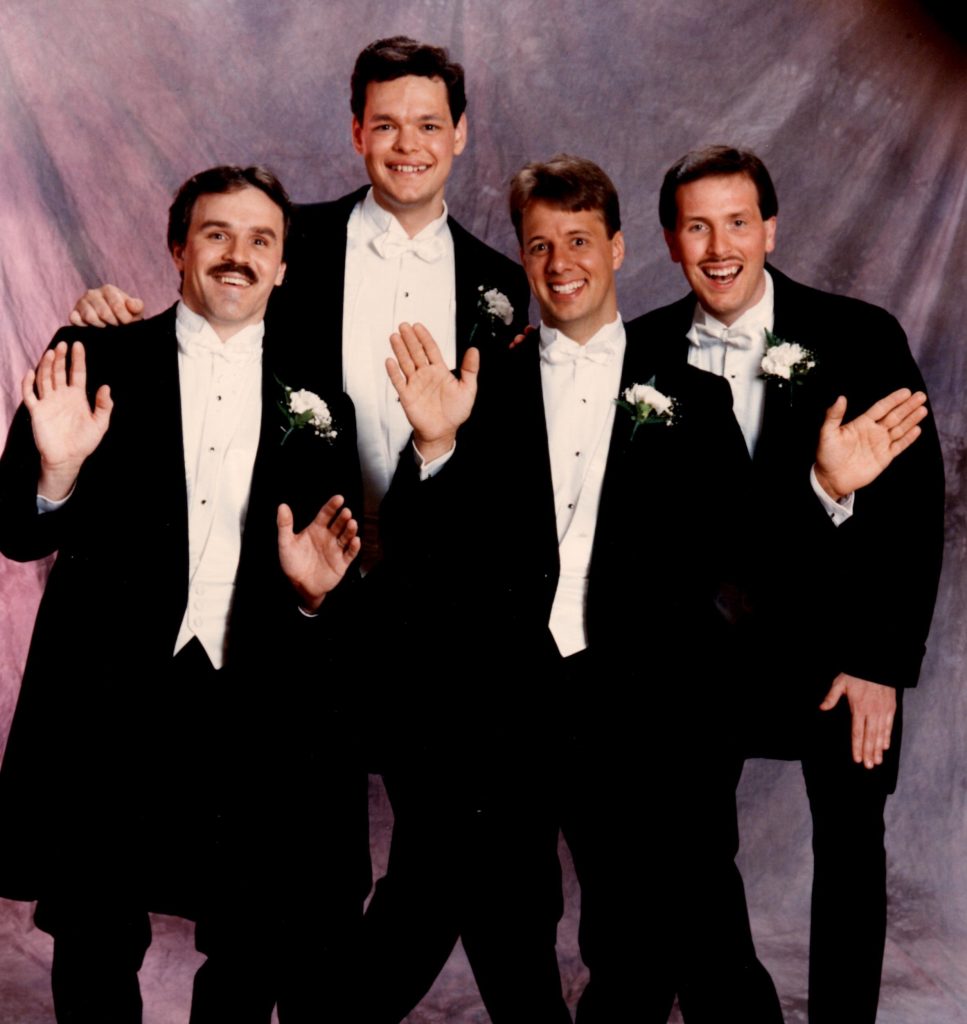
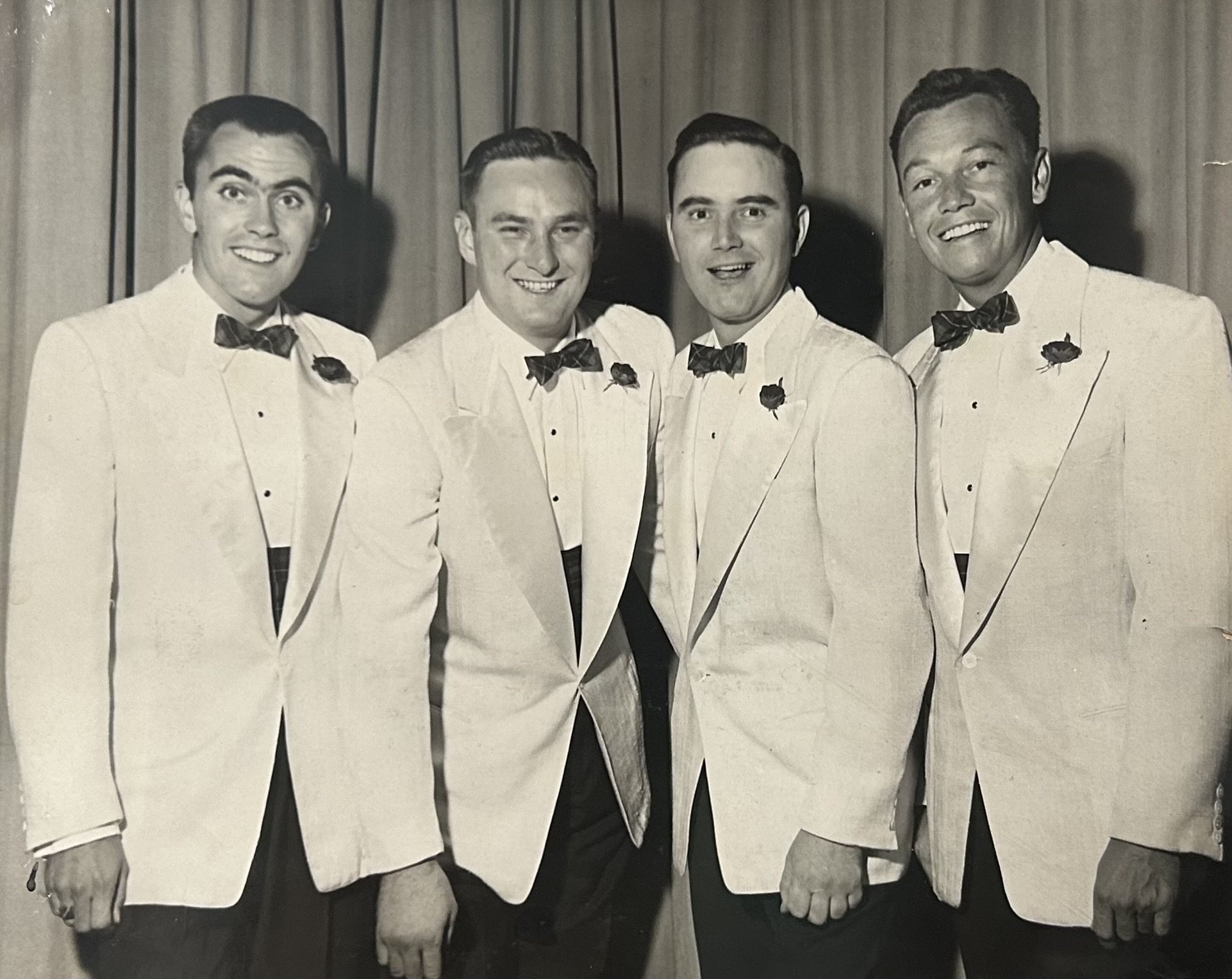
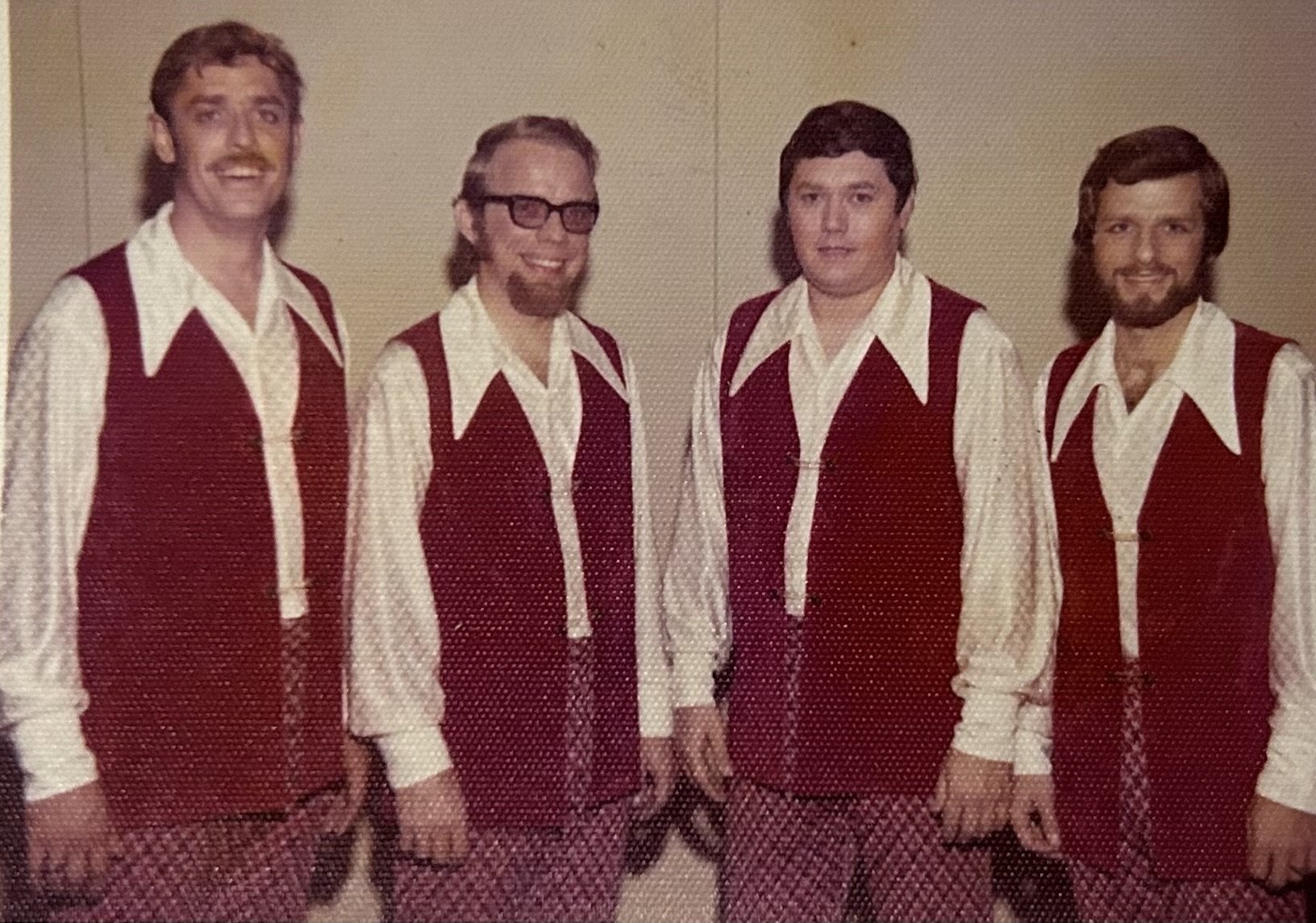
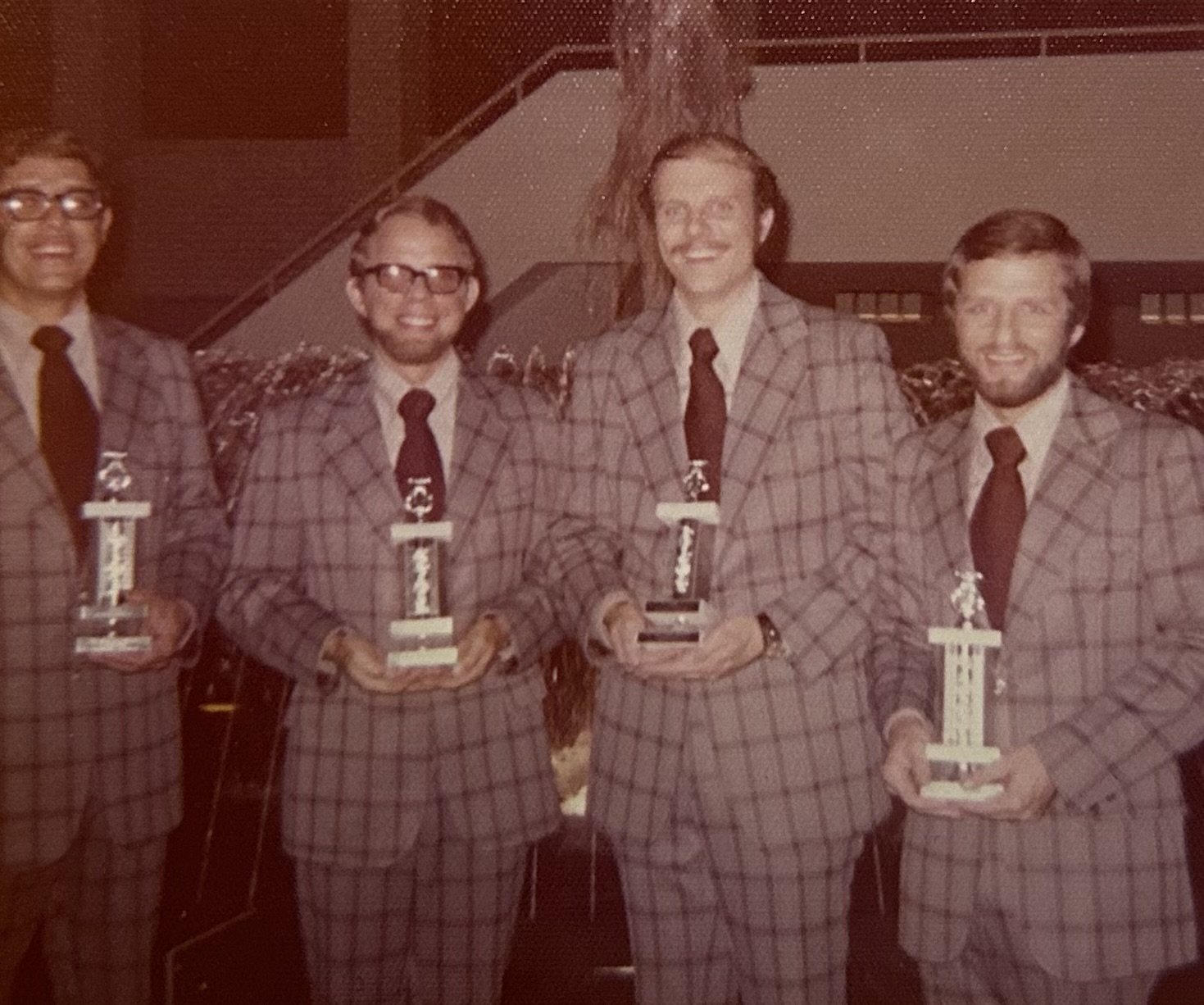
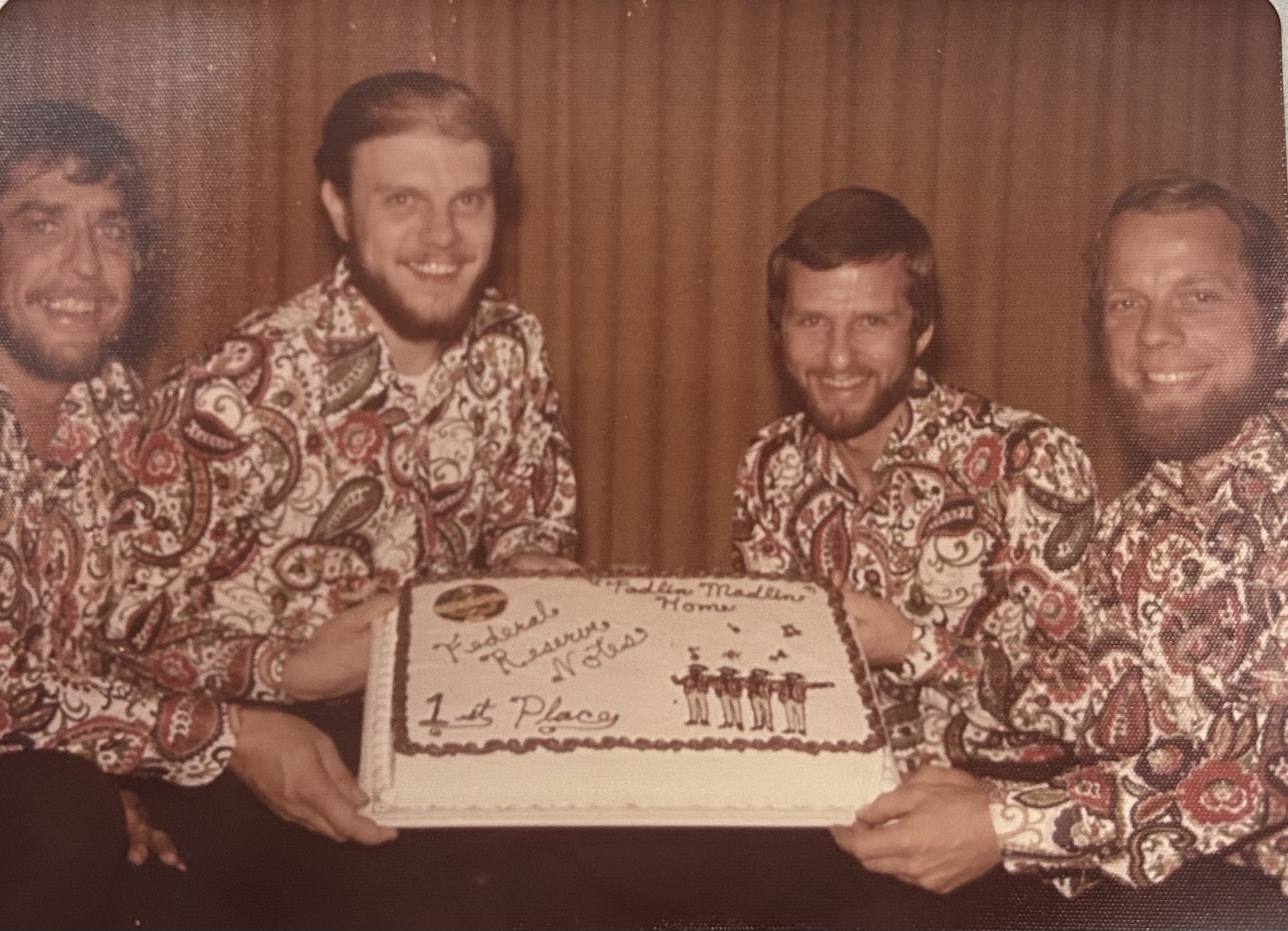
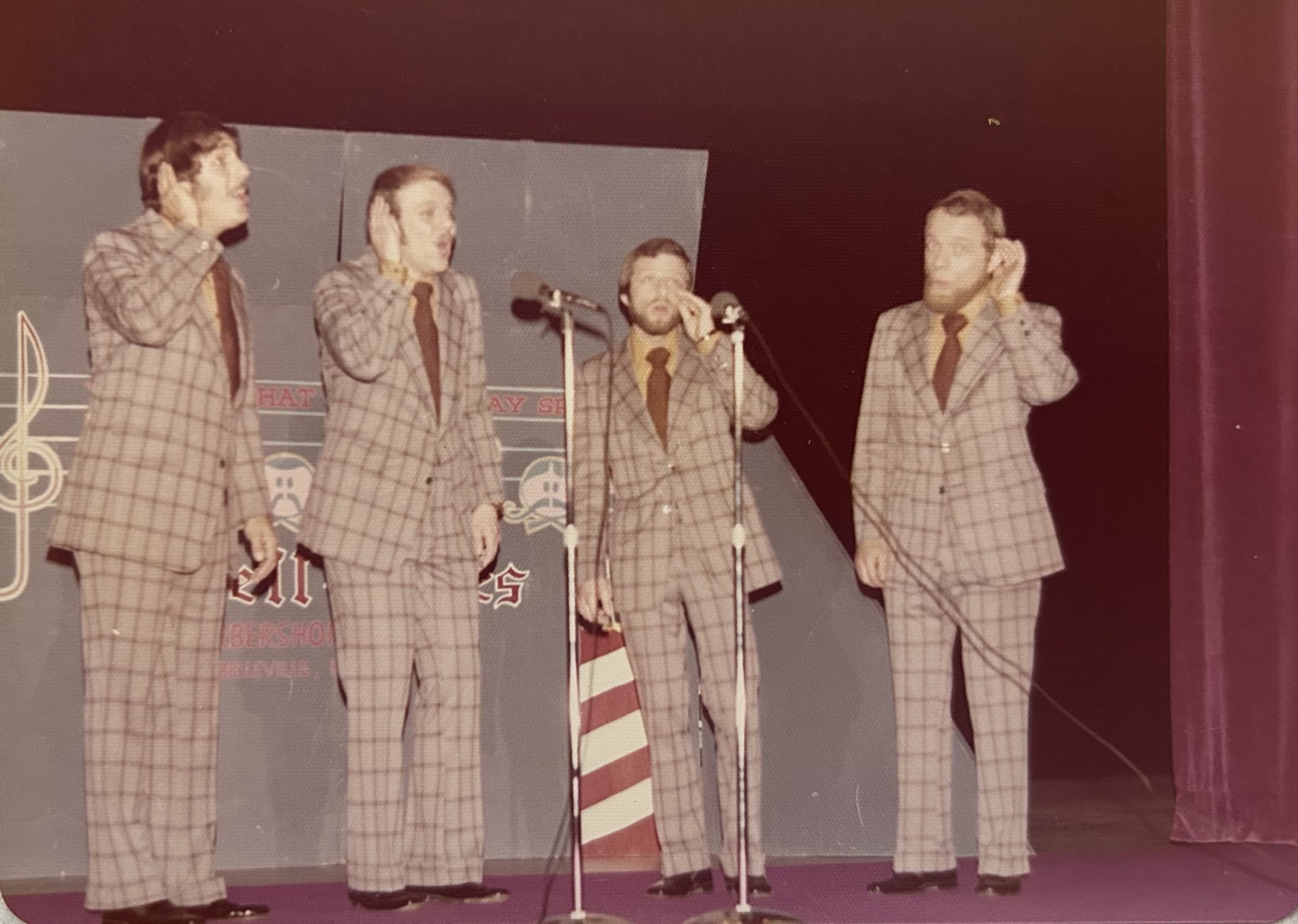
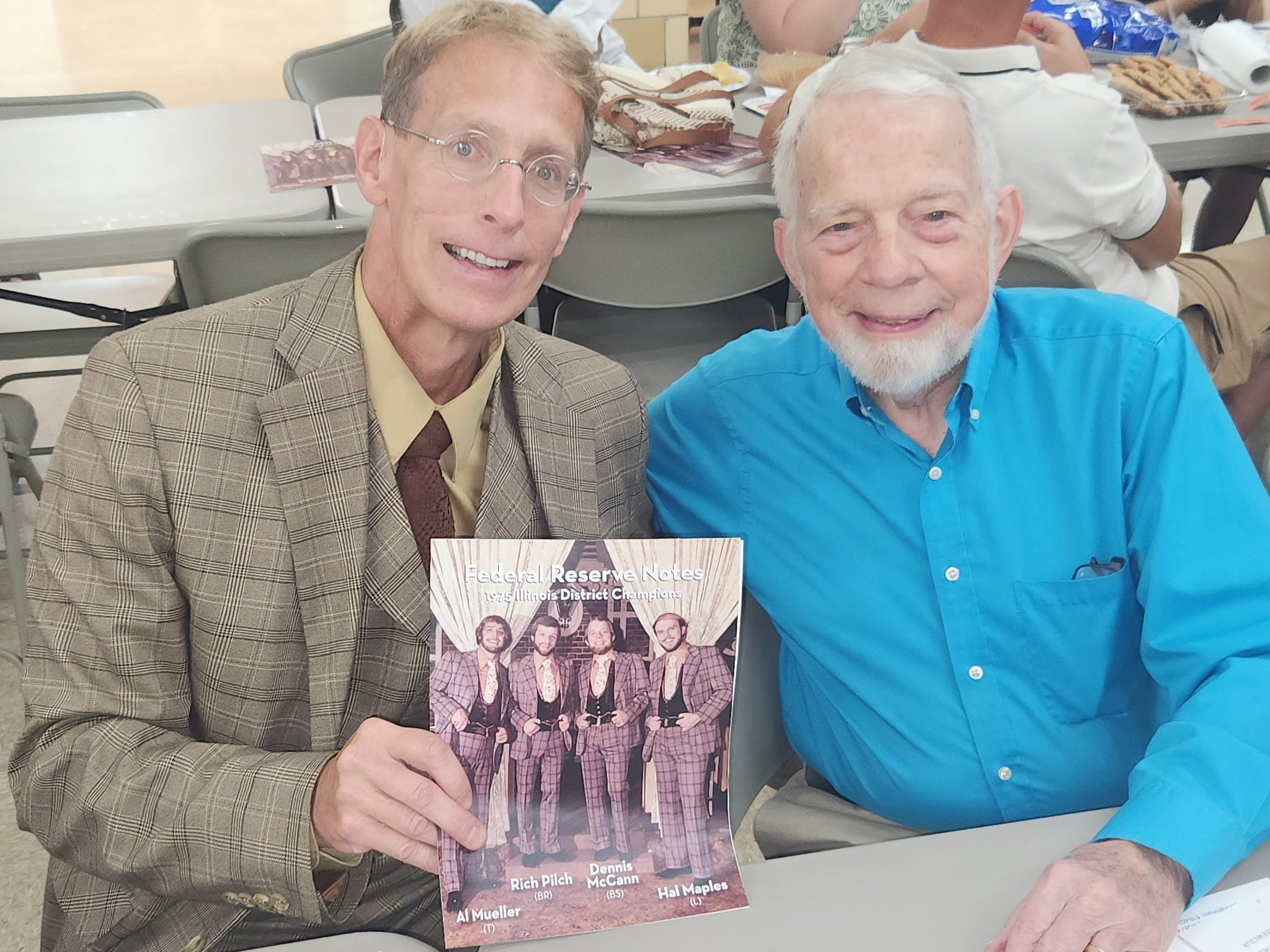
This issue spotlights our 50th anniversary district quartet champion, The Federal Reserve Notes.  Representing the Belleville and Collinsville Chapters, this group was a popular attraction on numerous barbershop shows in the mid-1970s. 

With The Federal Reserve Notes on the program, audiences commonly broke into laughter and tears with their performances. Whether they “tied my poor neglected body to the railroad tracks”, with Along Came Jones or pulled heartstrings with their emotion and chords, they left audiences anxious for their next performance performances.  A versatile quartet, the guys were known for zany performances, complete with a huge leather cowboy hat, a raucous wig, and “some old rotten rope that made my teeth itch and burn”, as well as touching renditions of In the Shade of the Old Apple Tree with chords that whispered and rang.  

As Mike Mueller, the son of tenor Eldred (Al) Mueller recalls attending their performances, “it surely was the comedy of Sarah Jane, (with Al, aka Sarah Jane wearing that ridiculous wig),  Dangerous Dan McGrew and Mr. Bassman that made me laugh and smile every time. The crazy baritone and the deadpan bass, Rich and Dennis, were perfect for the part.”  Their signature song, Paddlin’ Madeline, was an audience favorite, and one that earned them the top honors in competition.  
Tenor Al Mueller taught Biology at Mascoutah High School and then at Belleville Area College when it was founded. He joined the Belleville Sounds of Harmony around 1968 and there met Bob Cearnal, who would become a longtime friend, competitor, and fellow quartet member.  Hal Maples, the lead, was the last to join barbershop around 1971. Dennis, Rich, and Al had been trying to find a perfect fit in harmony and friendship when Hal stepped in for original lead George Bagot when life circumstances intervened.  Hal was known for his most sincere smile that could show the love he felt in every song the group sang.  He served as co-director of the Sounds of Harmony and later became a member of Ambassadors of Harmony in St. Charles, MO.  Bass Dennis McCann sang with the Mississippi Valley Chorus in Collinsville, IL and also occasionally with Sounds of Harmony.  Baritone Rich Pilch was a jeweler by trade in Granite City, and joined the Mississippi Valley Chorus around 1970. 

Often the quartet was in a friendly rivalry with Belleville’s Accutones featuring Bob Cearnal.  The two pushed each other to be the very best in competition.  After winning the district contest in 1975, and spending the next year headlining shows, the group ultimately disbanded.  However, Rich and Al remained together and joined with Bob Cearnal to form a quartet called Male Delivery that would go on to win top district honors in 1978  (See FTV Winter 2023 Issue).  

While Al and Hal have passed, Rich and Dennis are still around, living in Lawrenceville, Georgia and Collinsville, IL respectively.  Recently, Dennis attended the Sounds of Harmony chapter show, which featured a tribute to the quartet on their anniversary.

Though only together for a short time, the quartet was the perfect mix of great harmony and great hilarity.  They kept their audiences entertained and wanting more.  We celebrate our once (and always) district champions – The Federal Reserve Notes!

Clay Before FRED

Within Barbershop circles the name Clay Hine is quite popularly known.  Most barbershoppers know him as the baritone of FREDthe 1999 International Quartet Champions.  He is the son of Thom Hine, who sang in a popular 1960s quartet called the Midnight Oilers.  He is the father of Melody Hine, who is the baritone of the 2019 Harmony Inc. championship quartet, Hot Pursuit.  But did you know that this famous barbershopper got his start right here in Illinois?

Having a father that sang in quartets and directed a chorus certainly influenced Clay.  Growing up in the Chicagoland area, Clay attended the University of Illinois and graduated in 1986 with a degree in electrical engineering.  He joined the Society at the age of 14 and sang with the West Towns Chorus winning 2 silver medals with them in 1985 and 1986.  His first quartet was Debut which, after Clay left the group, went on to win the district championship in 1989.

Clay lives in the Atlanta area with his family and is a talented arranger, coach, director, and quartet man.  Yet another example of the barbershop greatness that was first nourished in our wonderful district!  Well done, Clay!

"Toy Soldiers On Parade"

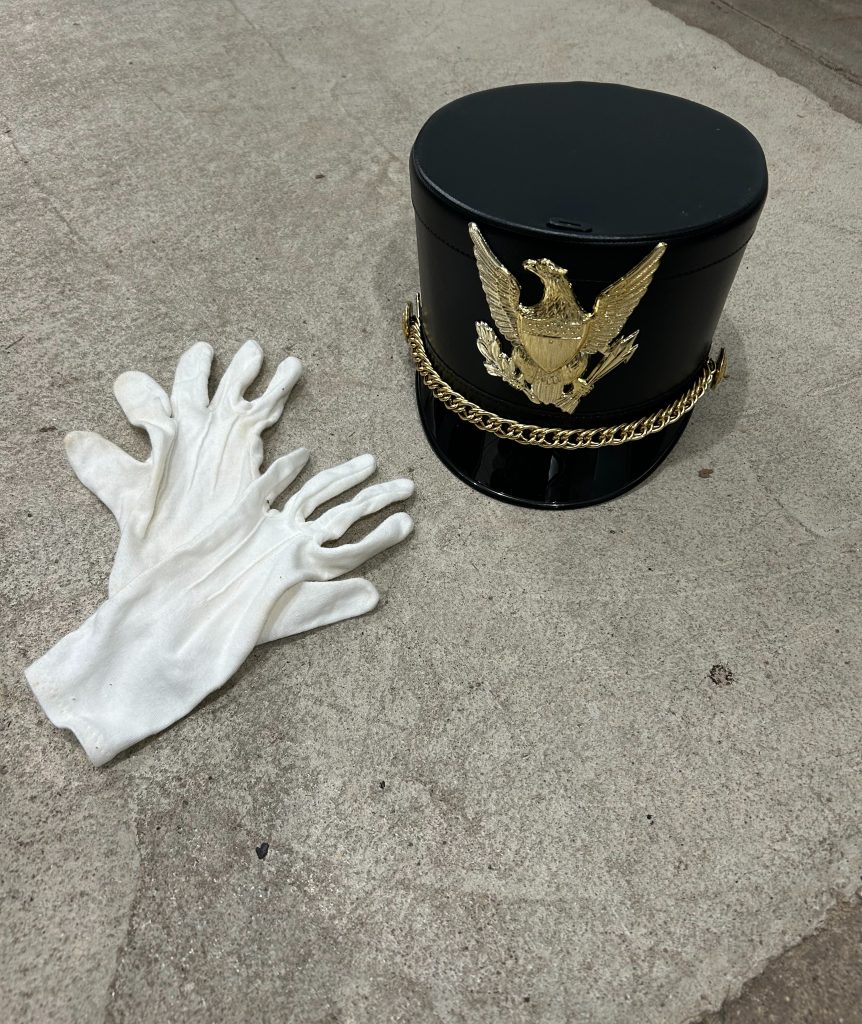
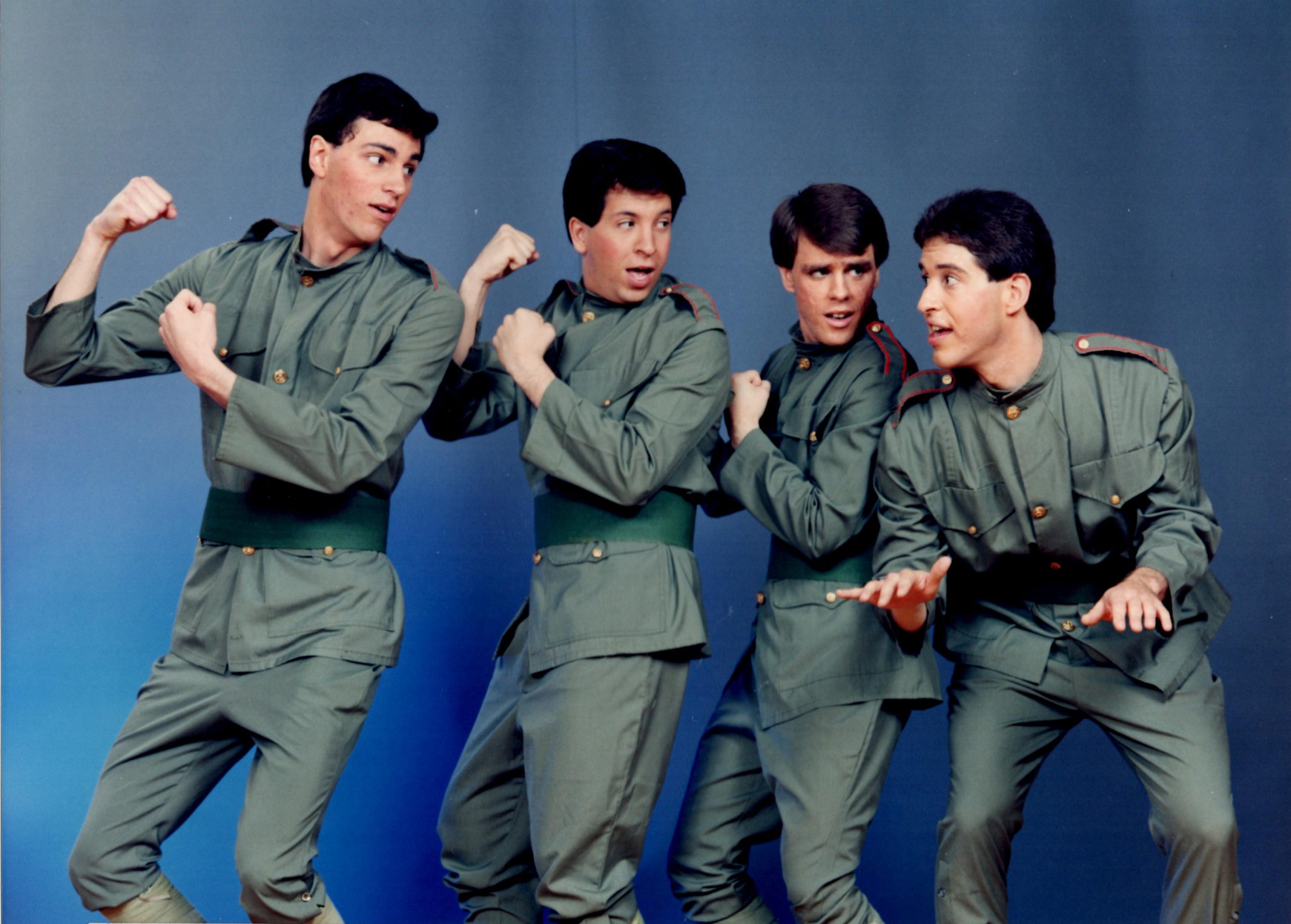
This issue’s featured artifacts have seen their share of international stage performances.  They are part of a costume worn by Don Barnick, tenor of the 1979 International Quartet Champions Grandma’s Boys, during their famous “toy soldier” package.  The set was recently acquired for the Illinois District archives.
Grandma’s Boys won the Illinois District back in 1968 with Hank Brandt (Lead), Jay Giallombardo (Bari), John Miller (Bass) and Jeff Calhoun (Tenor).  Over the course of the 1970s, the group replaced tenors until settling on Don Barnick from Cleveland.  The right combination had been found.  The group won the silver medals in 1978 and then the gold the following year.

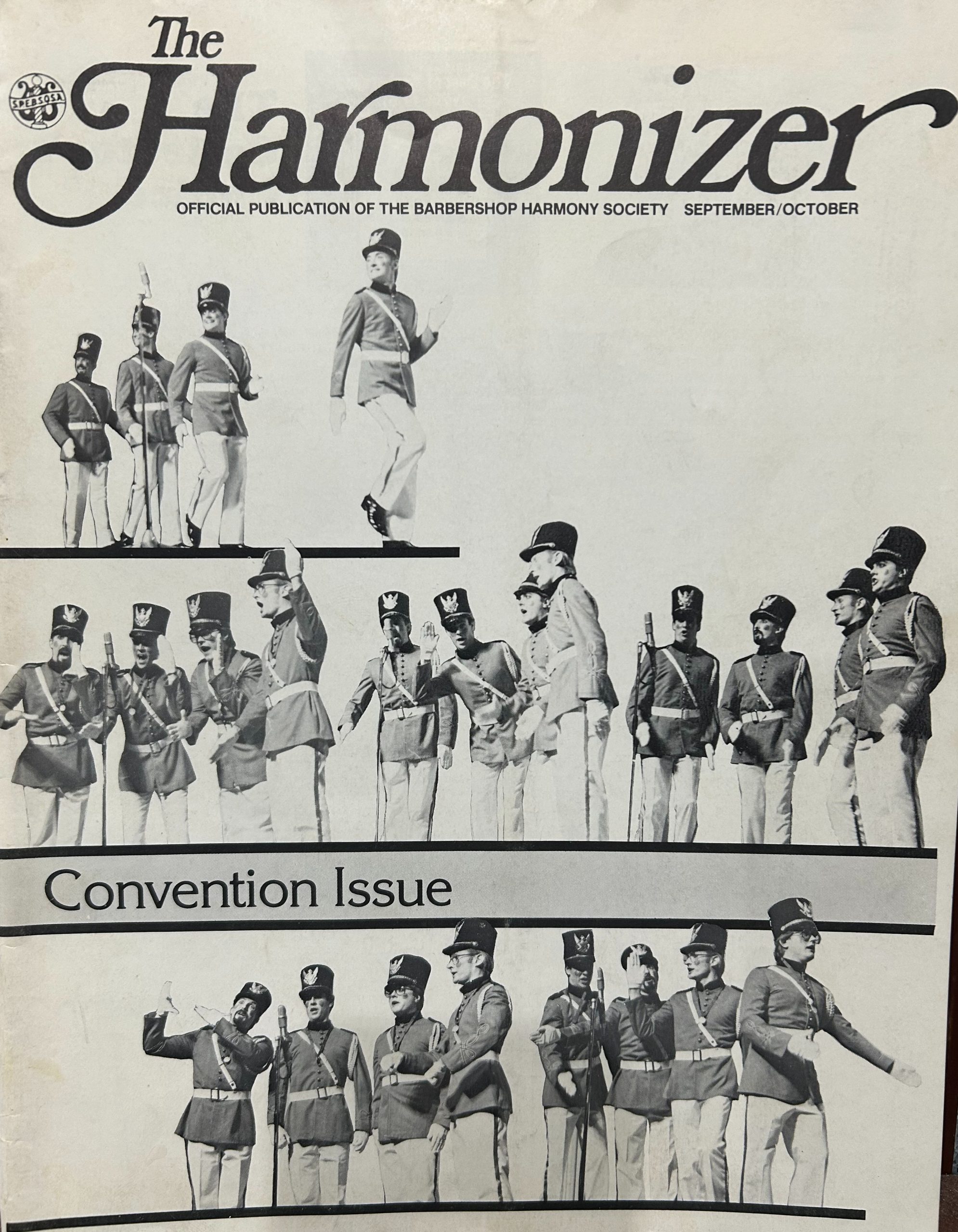
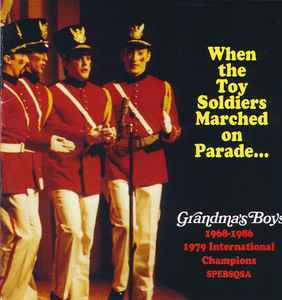
One of the group’s most popular routines was dressing up as toy soldiers and singing “When the Toy Soldiers Marched on Parade”.  It made the cover of the convention issue of The Harmonizer as well as the cover for a recording from the group.  The quartet once again donned the outfits when they reunited in 2004 for their 25th anniversary performance on the International AIC show, the video of which is featured in this issue.

The Illinois District is indeed proud to house such a significant piece of international quartet champion history!


The Village-Aires

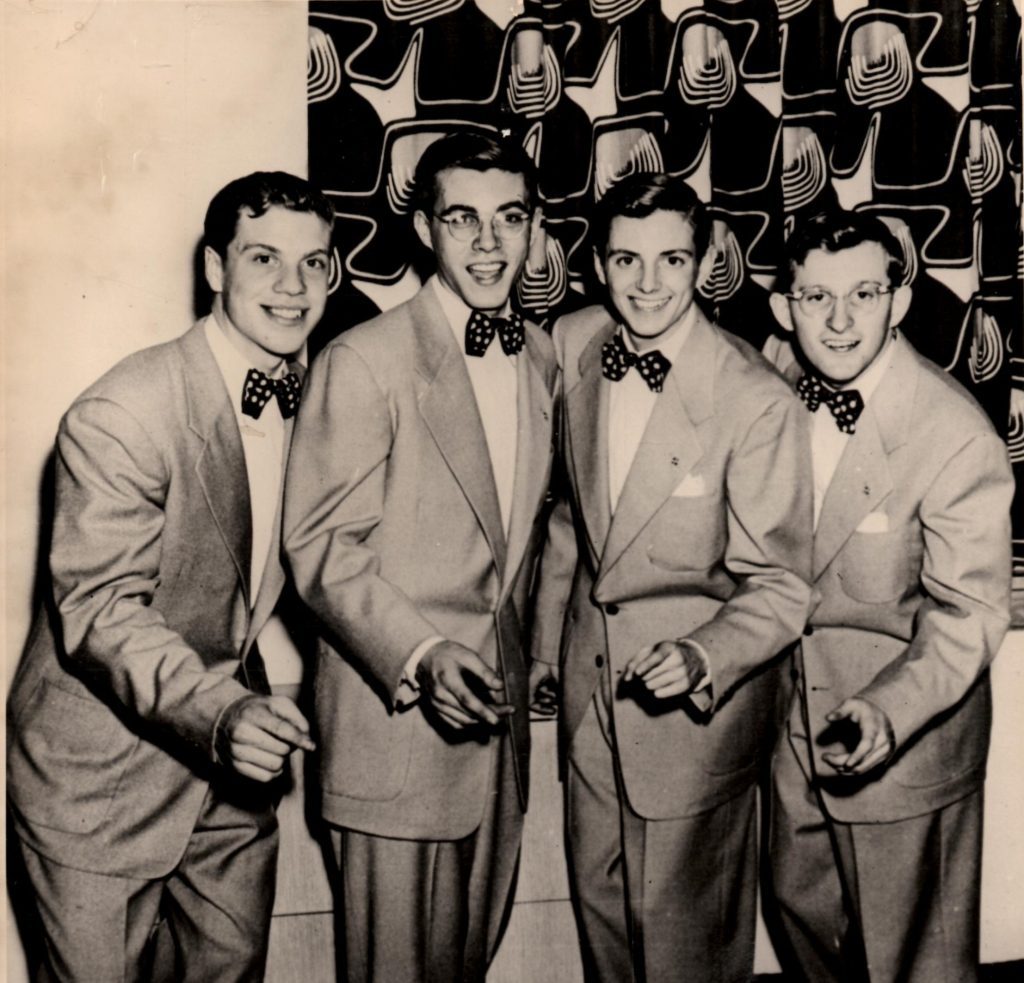
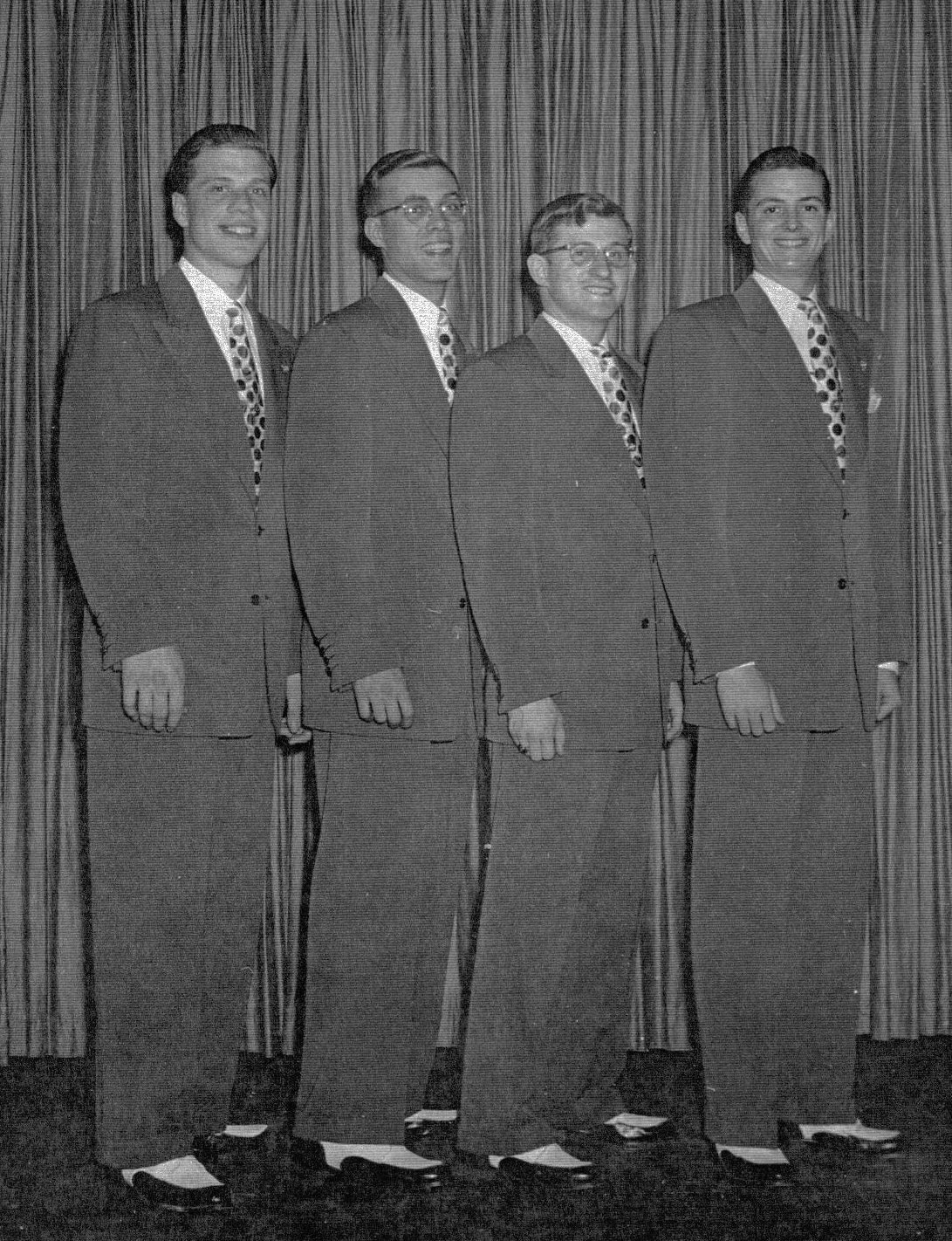
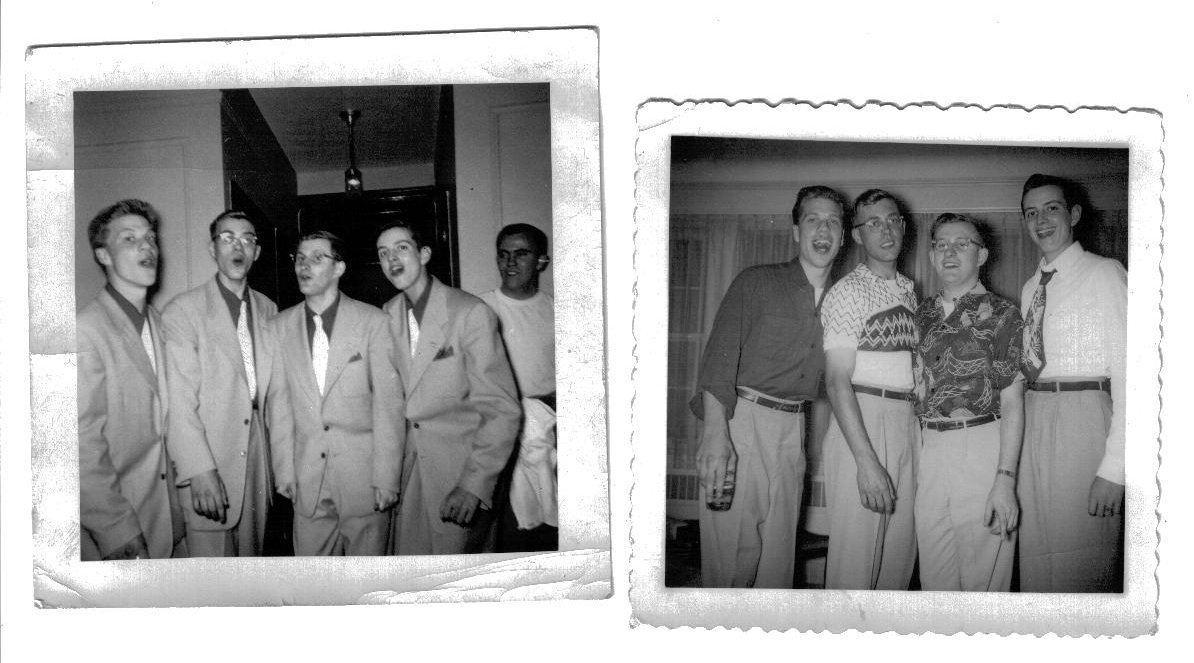
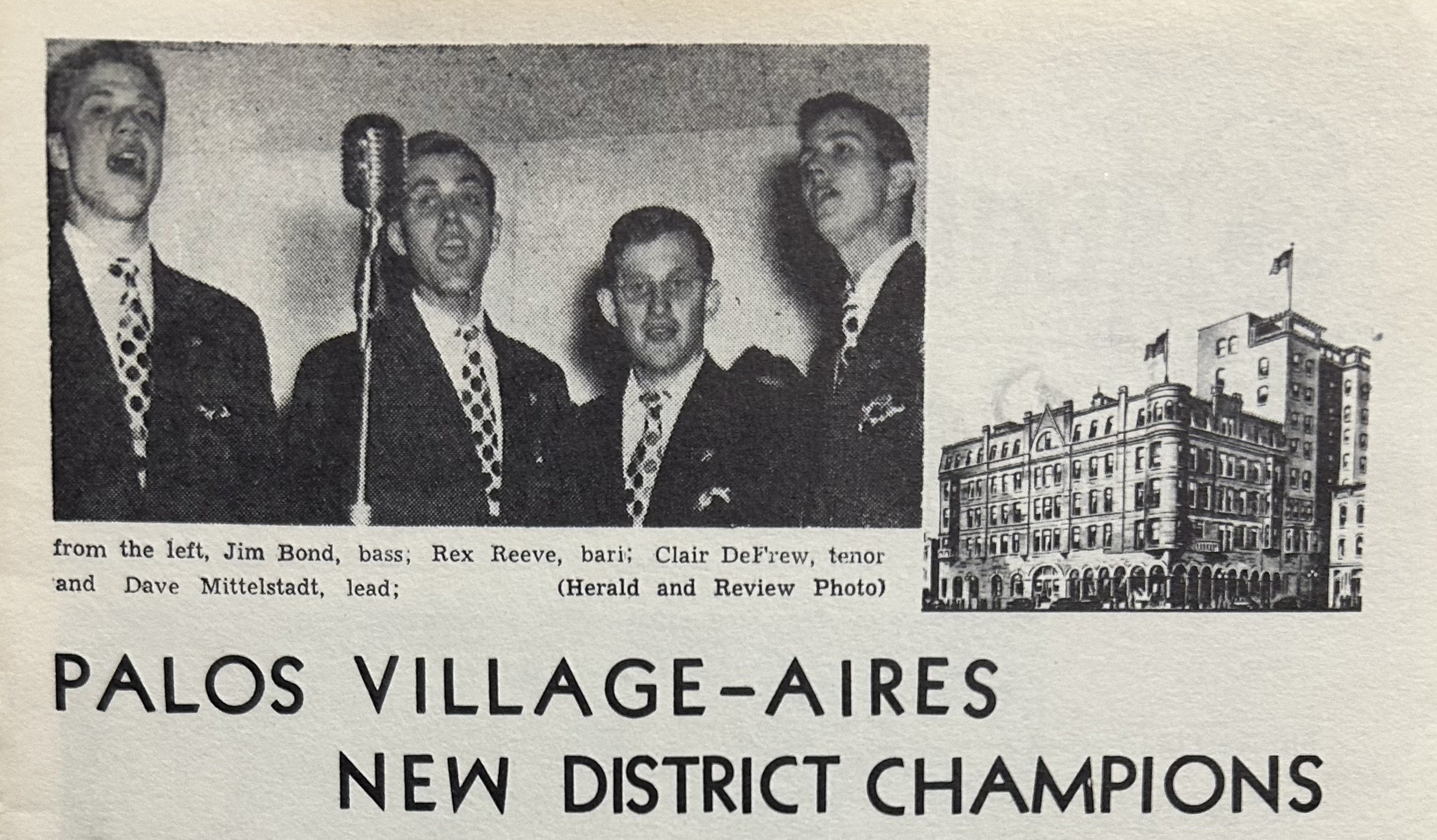
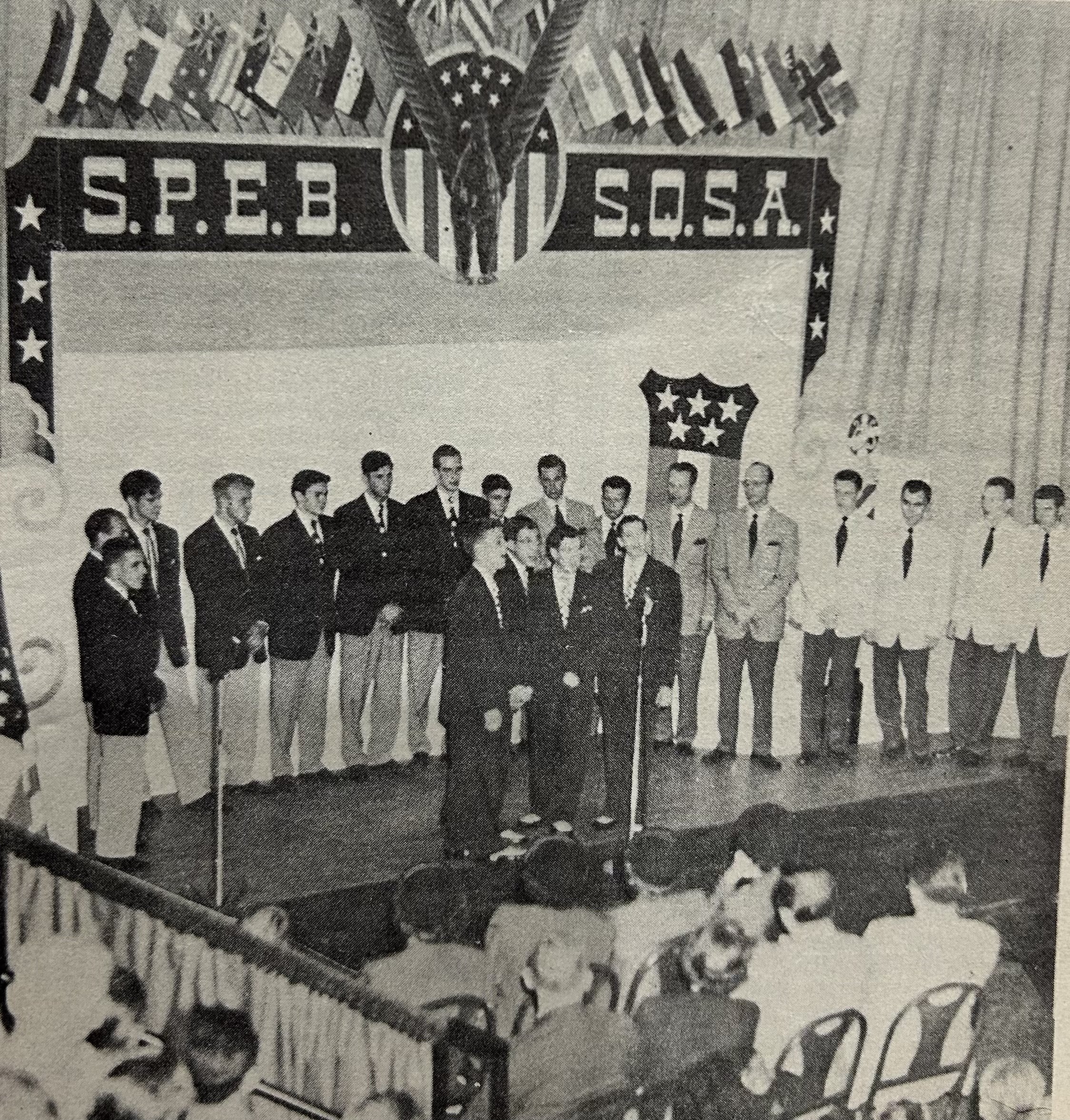
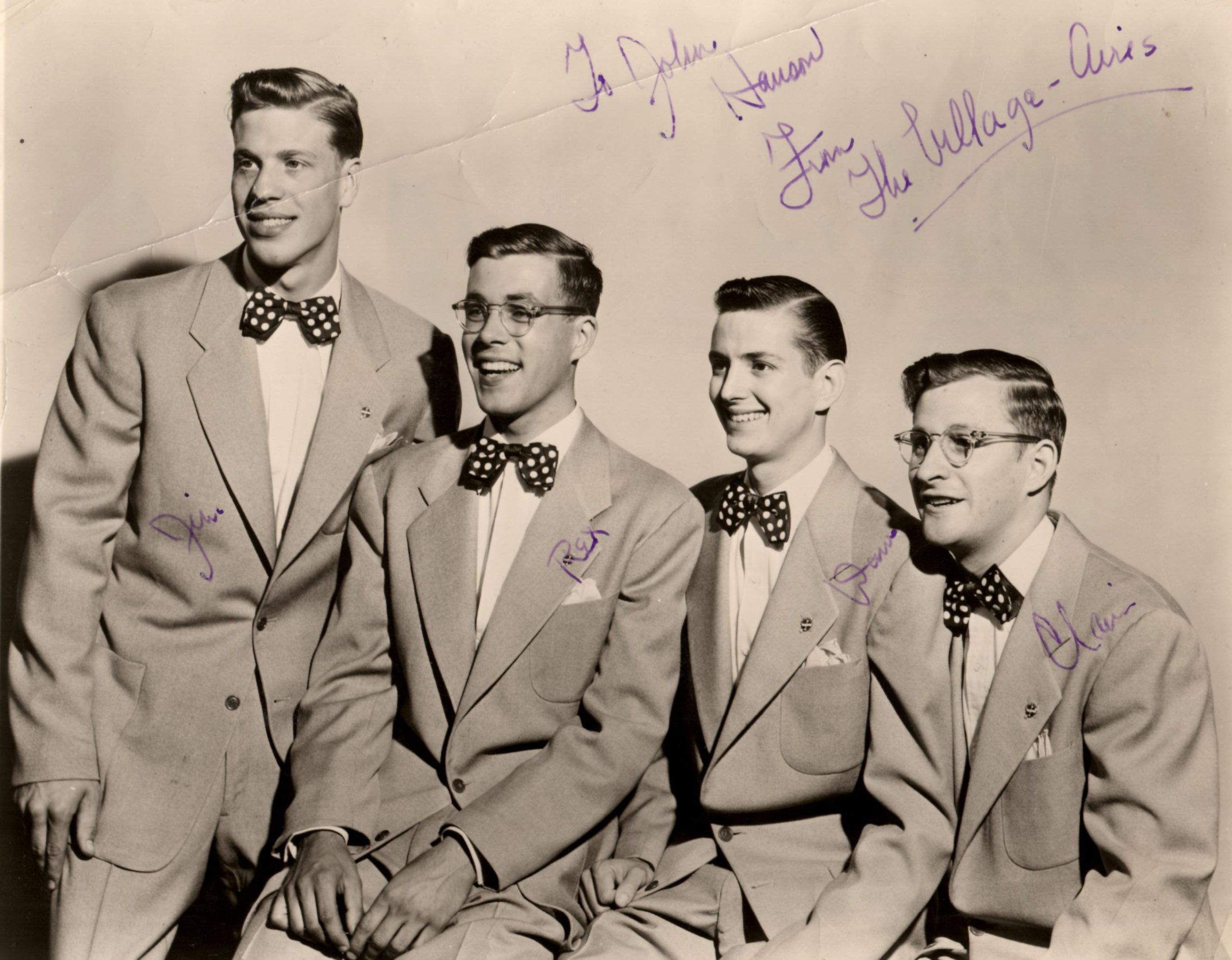
In this issue, we spotlight a quartet of young men that actually went on to win the district in its early years.  The Village-Aires from the former Palos Heights Chapter took top honors at the fall 1950 competition held at the Masonic Temple in Decatur, IL on Sunday, October 8, 1950 in front of an audience that numbered over 900 attendees.

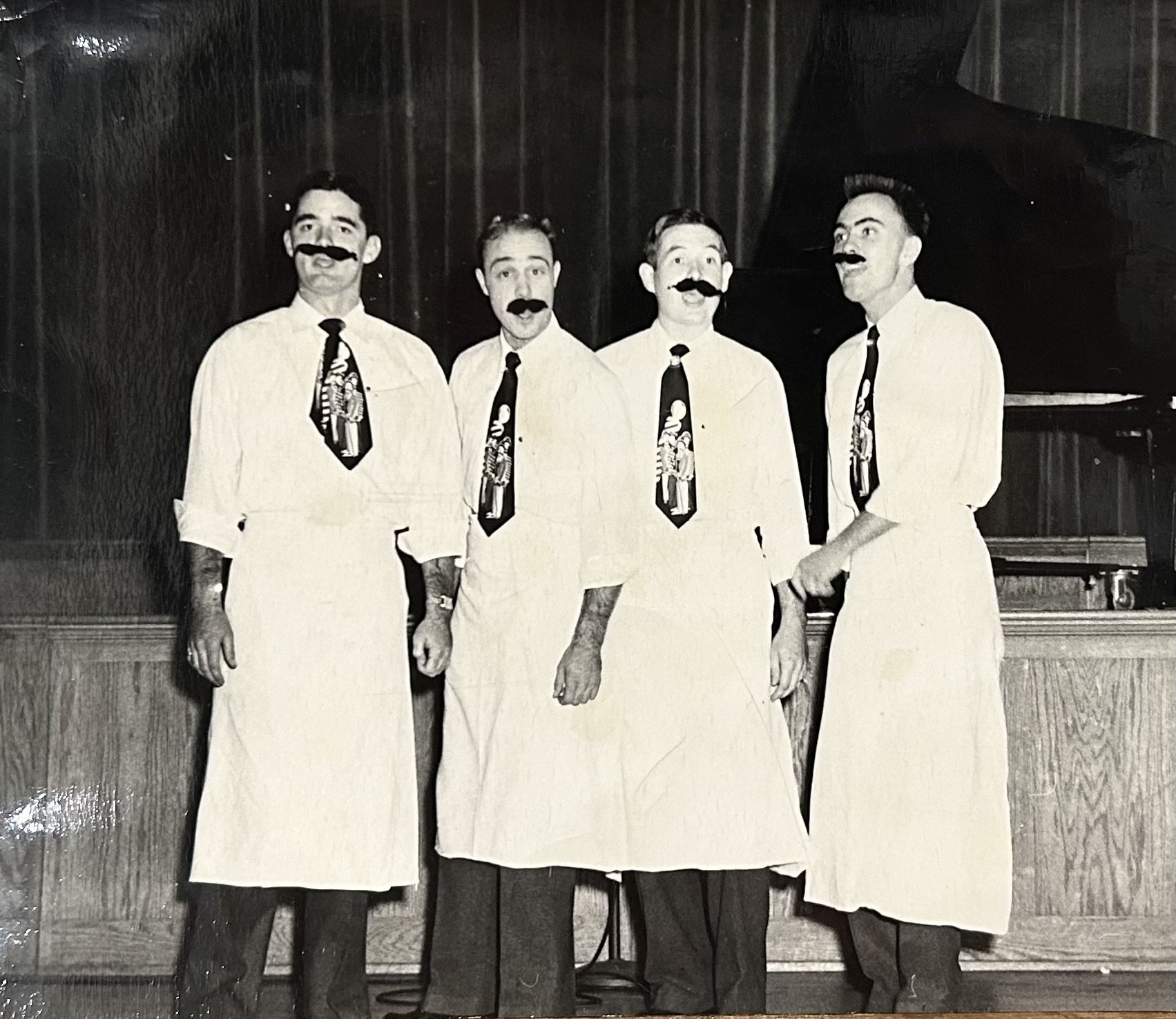
The group was just the seventh district quartet to win the competition and were the first “young” champs in district history.  The membership included tenor Clair DeFrew, lead Dave Mittelstadt, baritone Rex Reeve, and bass Jim Bond.   The group placed an impressive third place in their first competition just one year earlier, and had placed sixth at the International competition in Omaha in June, 1950 prior to winning the district title.

According to the November/December 1950 issue of Attacks & Releases, The Village-Aires “left no doubt in the minds of the judges or the audience as to their ability to produce Harmony of a championship caliber and the District can be justly proud to be represented by four men of such singing ability and fine character.”

When thinking of the young men who have won the district honors over the years (ex. Sundowners, After Hours, Greg Lee, Lincoln Beutel), we can look back to the guys who showed it was possible – Jim, Rex, Dave, and Clair.  We celebrate our first Young Men in Harmony district champs – The Village-Aires!

Time Piece (1991)

One of the most popular district quartets from the 1990s was a group called Time Piece.  Representing the Champaign-Urbana Chapter, the group consisted of tenor Tim Mahannah, lead Ken Steinsultz, baritone Kevin Swartz, and bass Lee Reifsteck.  Throughout the 1990s, the quartet routinely made the top ten in district competitions.

This recording of “Sing a Good Old Barbershop Song” is from the 1991 fall district quartet finals competition that earned the group a 7th place finish overall.  It features excerpts from many old Barbershop standards and includes a surprise “double” tag that thrilled the audience.

Next Issue: Coming Fall 2025

Stay "tuned!"

WELCOME TO YOUR NEW DISTRICT WEBSITE!

We’re excited for you to be here! Much of the data on this site is pulled directly from the BHS database. If you see something that is incorrect, please let us know! You’ll find this button:

at the bottom of every page on the site. Just click it to report any errors you find! 

Once you click the X on this pop-up, you shouldn’t continue seeing it every time you visit the site!