(adapted from a archival biography by Jim Stahly)
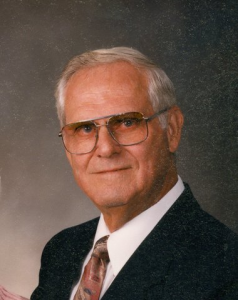
Jim Moses was born Aug. 4, 1927, at Poplar Bluffs, Mo., the son of Claude and Audrey Moses. Singing was part of Jim’s early life. His parents sang duets in church, and his father sang tenor in an Illinois River riverboat quartet. They had moved to Pekin, Illinois in search of work during the Great Depression. Jim was educated in Pekin Schools, including Washington Junior High and Pekin High School.
Thanks to several teachers who recognized his talent, Jim became involved in music at an early age, both singing and playing the sousaphone. In high school, Jim played his horn in the marching band, led by Drum Major Jim Richards, a retired Society judge and long-time barbershopper. Moses played his sousaphone in Pekin’s Municipal Band and also sang in the high school glee club.
An avid tennis player, Jim and partner Wilson Besant won the Illinois state doubles title in 1945. It was the school’s first state sports title in history. The two enlisted in the U.S. Navy Reserves together after graduation that same year. Jim sang in the Blue Jacket Choir (heard on WGN Radio on Sundays) at Glenview Naval Air Station during that 11 months of service.
Jim then enrolled at the University of Illinois in 1946, studying business and music. While there, he took on his first a cappella group when he became director of his Alpha Tau Omega Fraternity chorus. It performed in fraternity competitions and serenaded sororities on campus. Voice teacher Bruce Foote expanded Jim’s ear training, vocal training, and theory. Jim earned his business and music degrees in 1951 and, after receiving a draft notice because of the Korean Conflict, he opted for another 11-month stint in the Navy Reserves.
Jim returned to Pekin in 1952. He was a soloist in the Ed Miller Band, a Pekin dance band and sang in the Pekin Methodist Church choir. Because the choir director was also the organist, Jim offered to lead the choir. He was welcomed, which resulted in a Pekin barbershopper witnessing his ability and informing the Pekin Chorus.
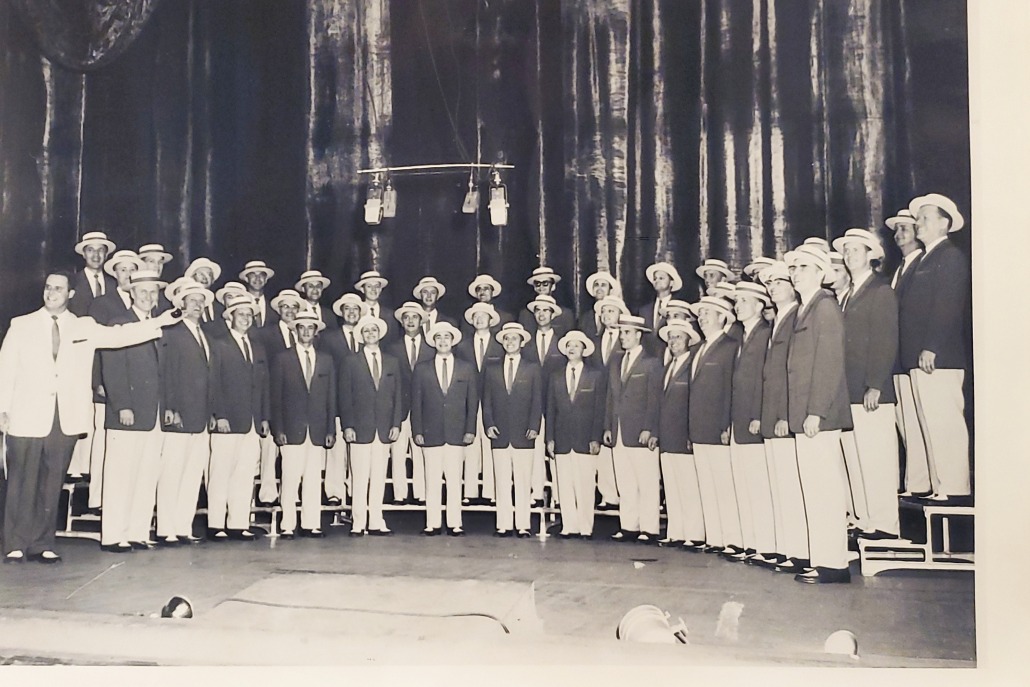
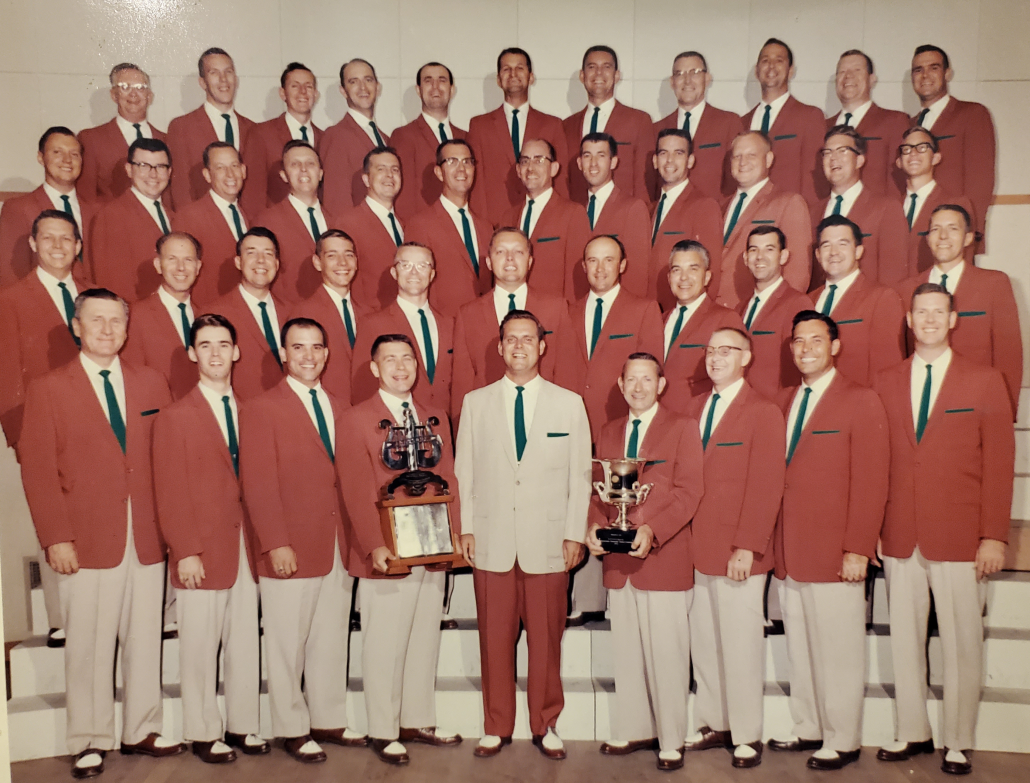
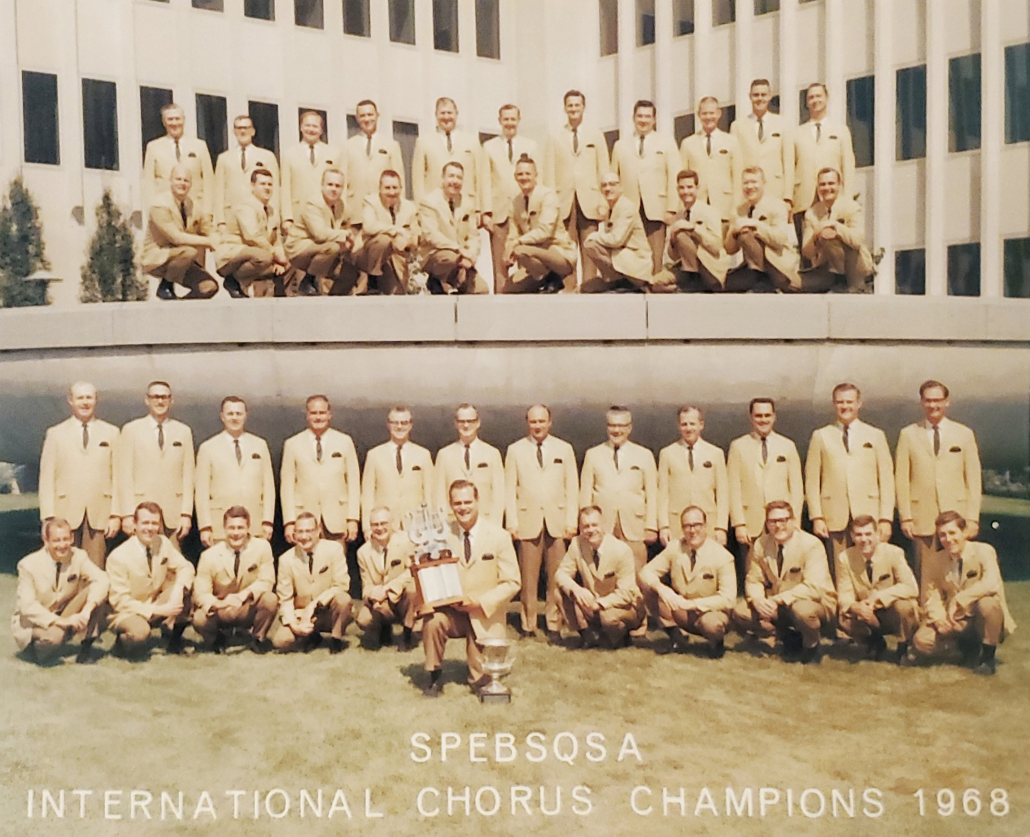
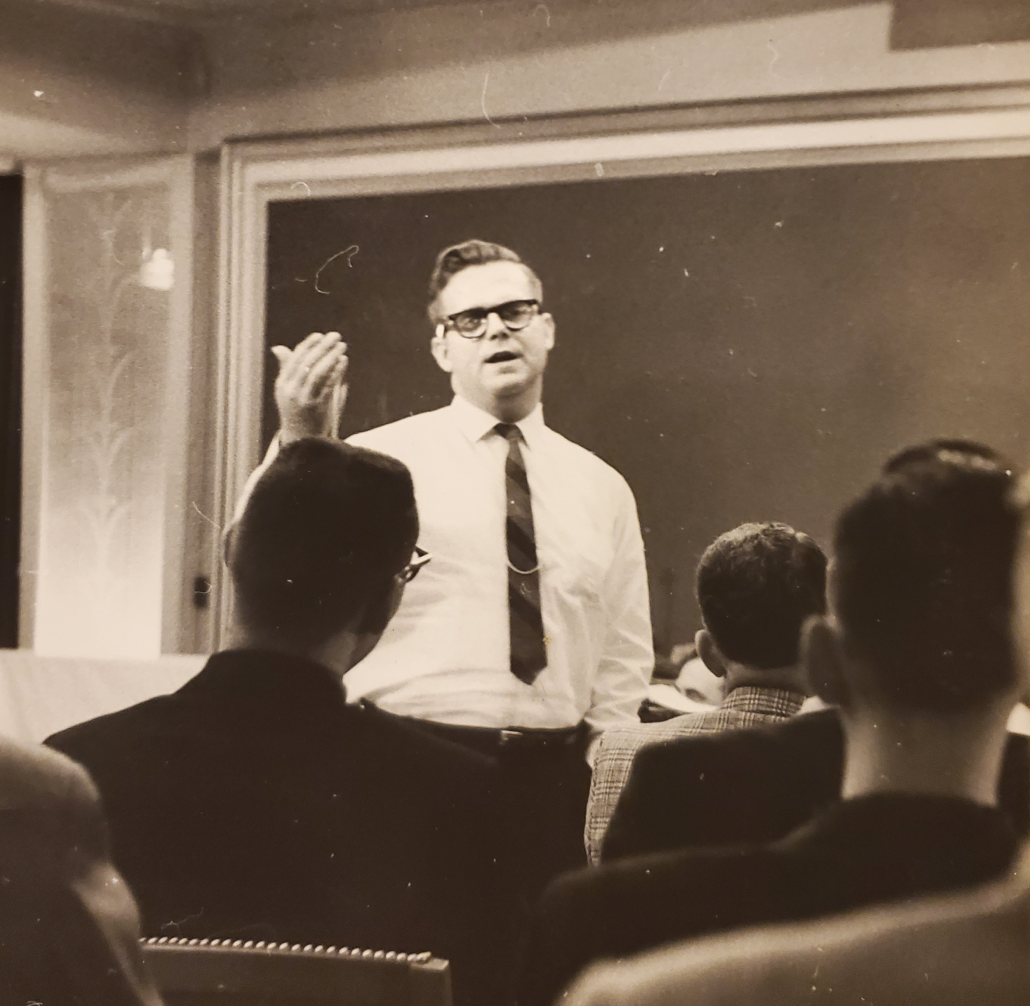
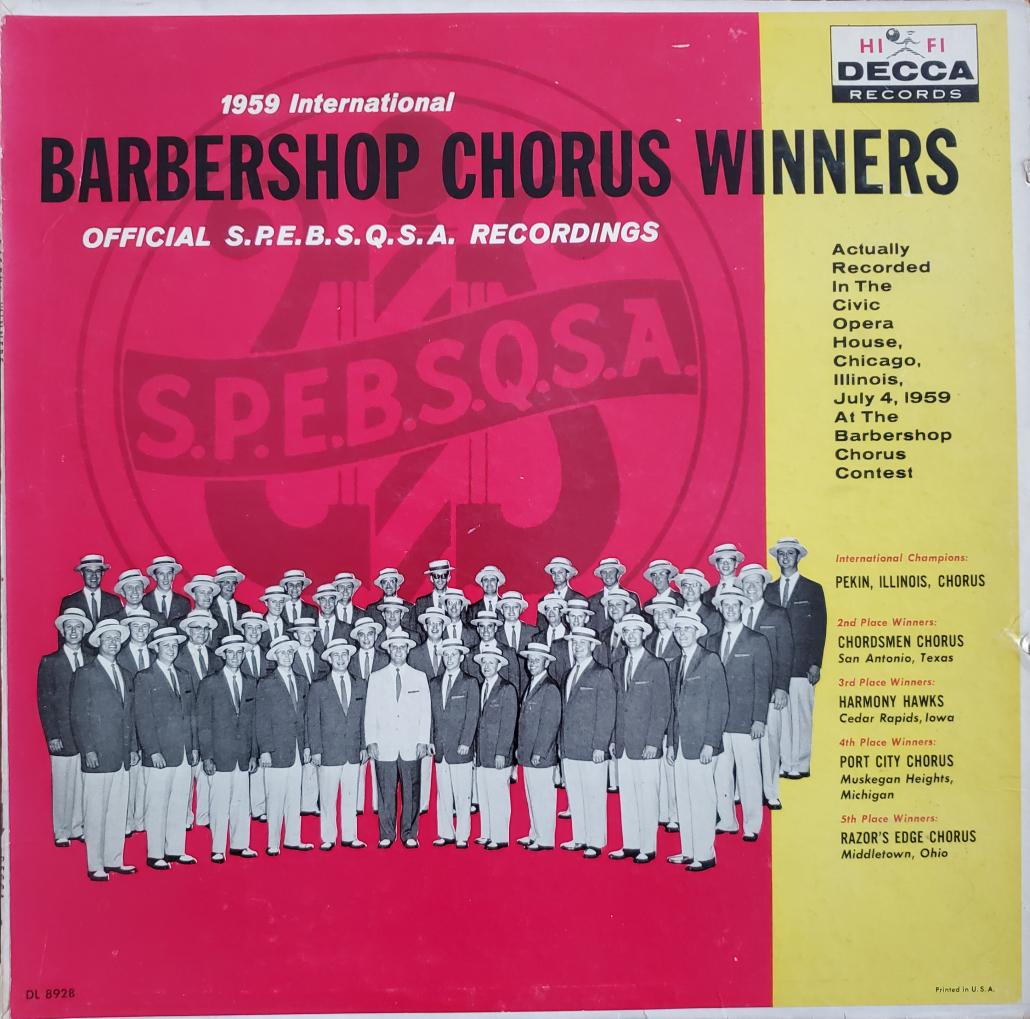
Pekin’s barbershop chapter had formed May 29, 1950, with Harry Langley as director. In 1951, H. Smith Applegate of Peoria became director, and Jim succeeded him in 1955. Jim Moses directed the Pekin Chorus for 20 years, leading them to three gold medals in international chorus competition. The group of about 40 men won in 1959 (Chicago), 1963 (Toronto), and 1968 (Cincinnati), giving Jim the distinction of being the first director in the Society ever to win three gold medals. Jim retired from directing in 1974.
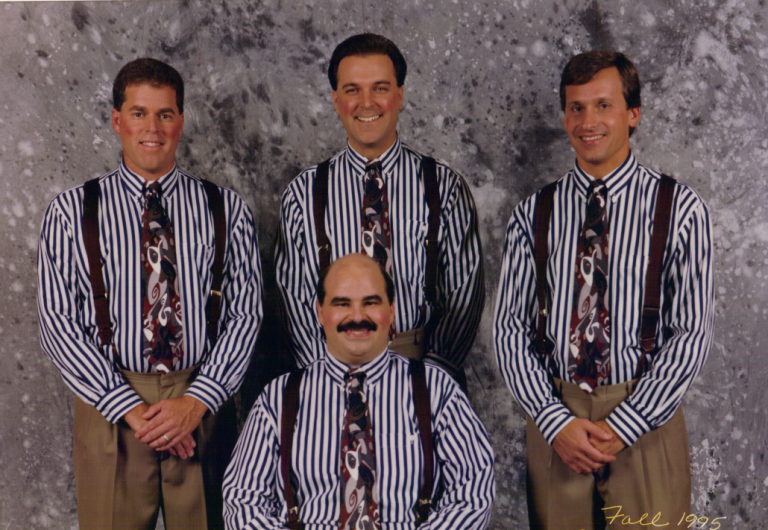
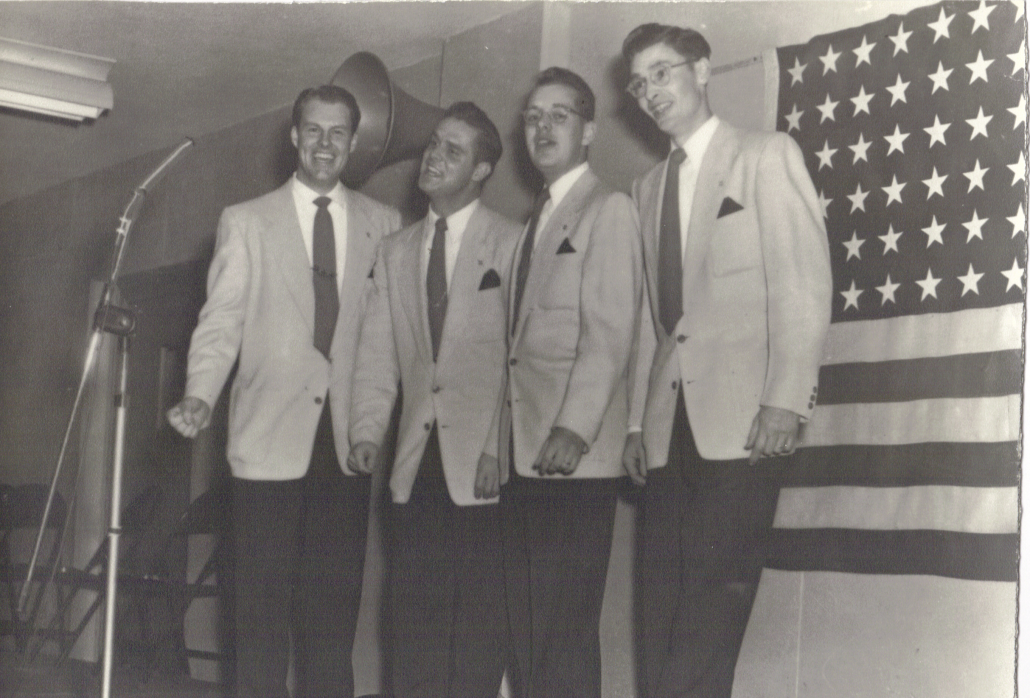
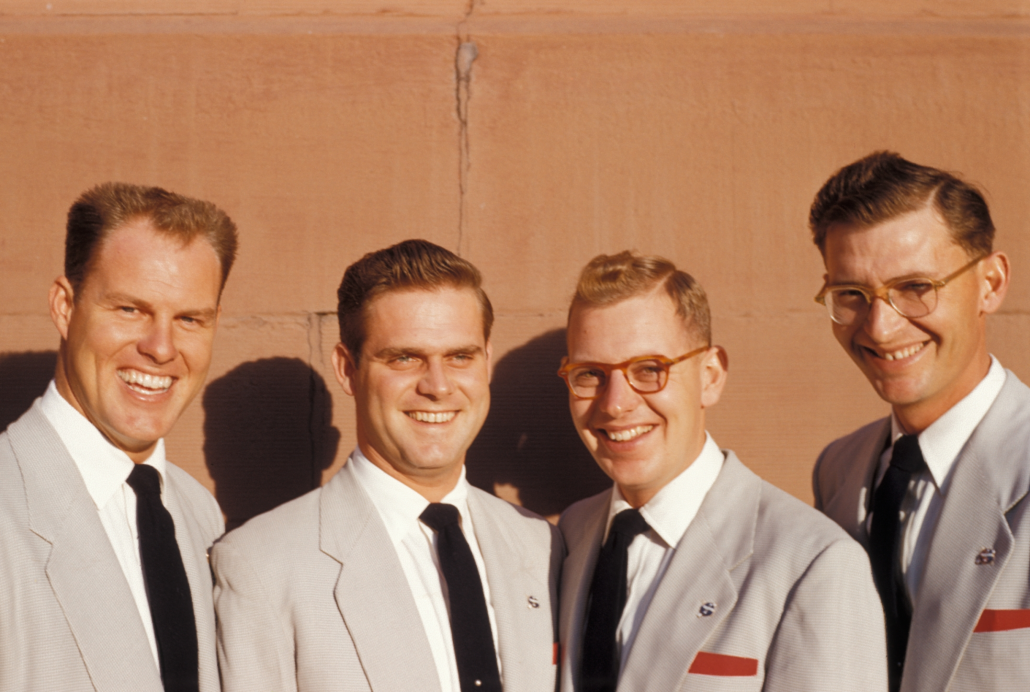
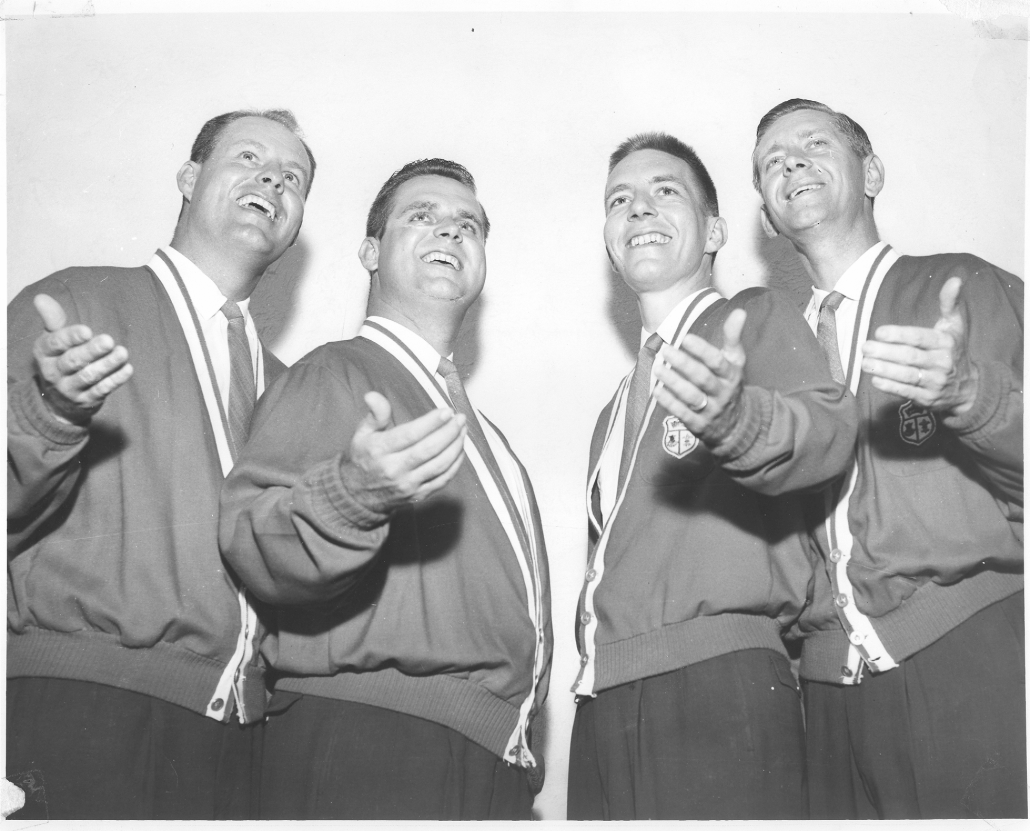
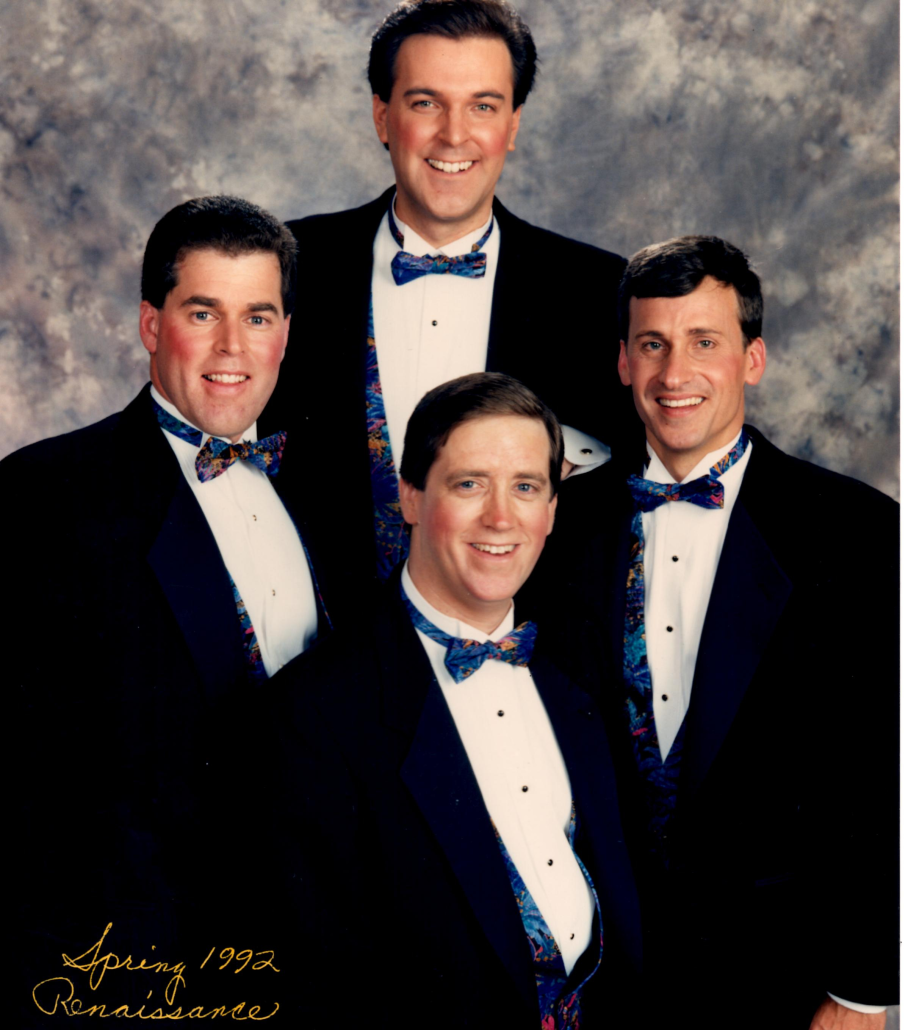
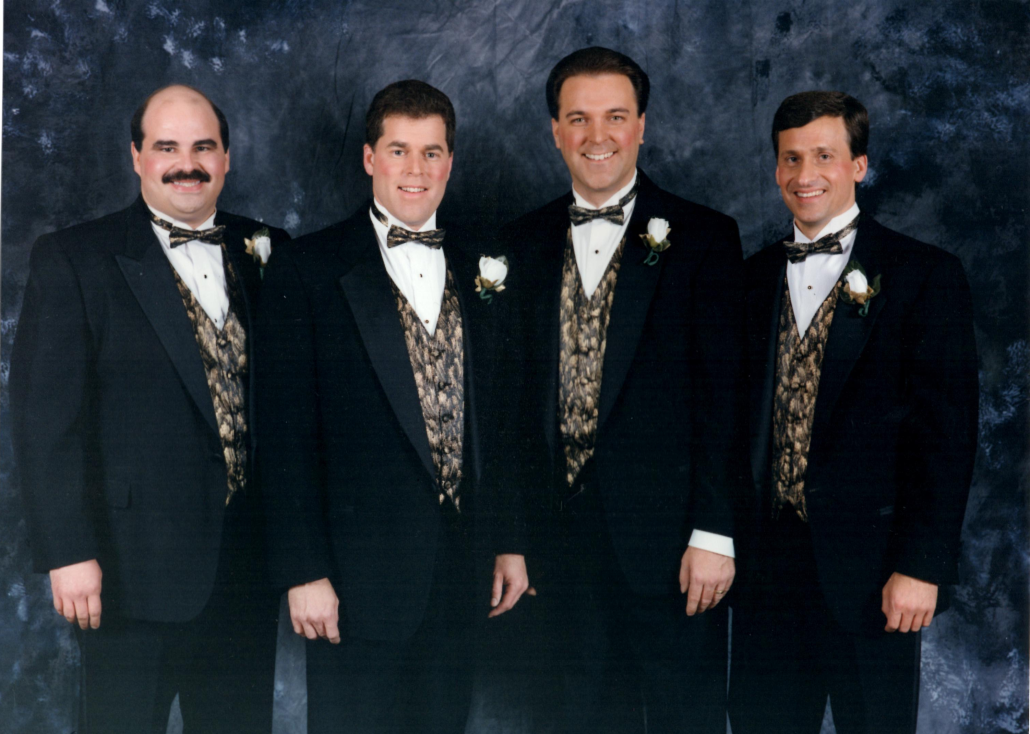
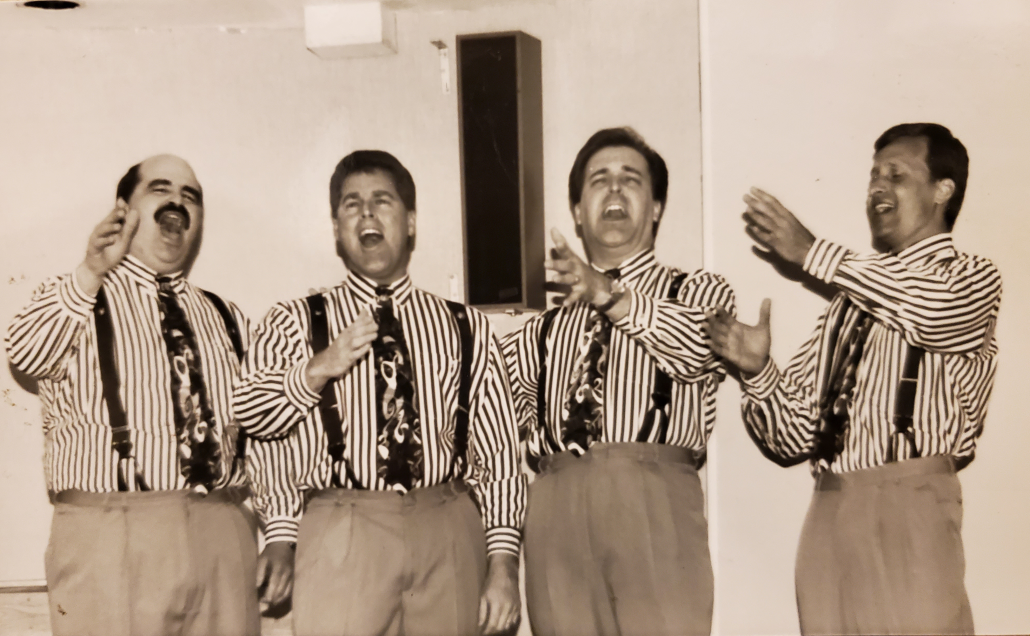
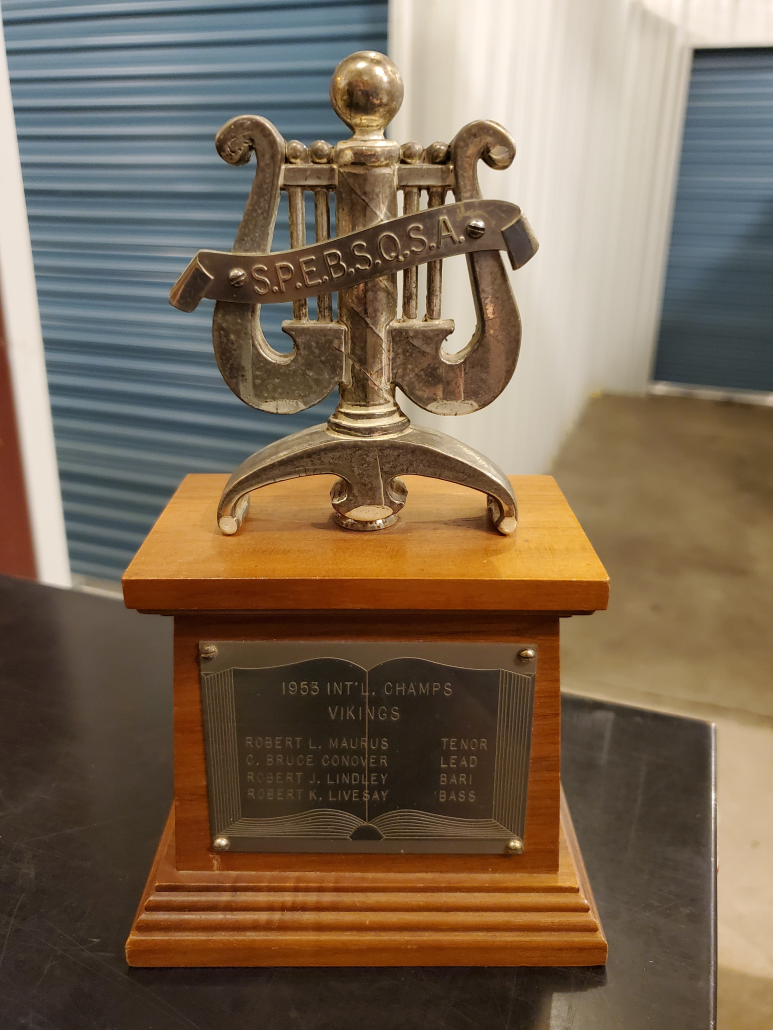
Besides being a chorus director, Jim was also active in quartets. Having joined the Society in 1952, it wasn’t long before Jim replaced the lead of the Kord Kutters quartet. They became the Illinois District Champions in 1953 and placed as high as 10th in International at the 1956 competition in Minneapolis. That was the first of three versions of the Kord Kutters. All three included Jim on lead and Tom Powell on tenor. Stan Sharpe was the first baritone, and Bob Lindley (baritone of The Vikings, ‘53 international champs) sang in two. There were three basses: Paul Sudberry, Stan Sharpe and Bruce Smith.
Jim began working at Caterpillar’s East Peoria plant in methods & procedures, retiring in 1986. Jim met his wife Dorothy at a quartet rehearsal at Tom Powell’s home. Tom’s wife was good friends with Dorothy and invited her to a rehearsal, unbeknownst to Jim. “That was the luckiest day of my life,” says Moses. “Our eyes met, and that was it!” They married on June 10, 1953, and spent their honeymoon at the Society’s Detroit convention! Dorothy had a daughter, Bonnie, whom Jim adopted. They had two sons, Jim and John. Dorothy passed away in 2015.
While not an active barbershopper anymore, Jim was honored by the QCA as their 2016 Music Man recipient. His legacy upon the District and Society is wide reaching, indeed.
Jim’s simple approach to his life and music can be summed up by a lesson he learned from his high school tennis coach – (1) always have a strategy, (2) never cheat, and (3) don’t give up when you get behind, because life and tennis always have their ups and downs.
Well said, Jim.