(Adapted from the Illinois District Archives – Early District History)
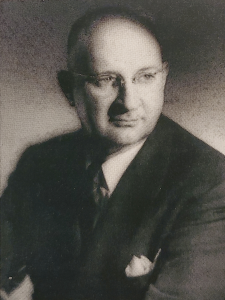
Barbershoppers who have attended (or competed in) a district or international contest have likely heard the name “Frank Thorne” mentioned at some point during the competition. While most barbershoppers only know that name as a “chapter-at-large” whose individuals are not affiliated with a regular chapter, few know the story of the namesake – a true pioneer in the Illinois District, and whose legacy spans the entire Society to this day.
Frank Thorne came into the Society in 1941 when it was just three years old and when the Chicago #1 chapter was in its struggling second year. Like many other men in their forties and fifties at that time who were hungry for harmony, he could hardly believe that such a unique organization existed. But he took the word of his old friend Maurice E. “Molly” Reagan of Pittsburgh (who introduced Frank to barbershop harmony in 1912) that the Society could provide the harmony opportunities that Thorne had missed sorely since his graduation from the University of Illinois in 1915.
Characteristically enthusiastic and with a desire to be connected only with success, Thorne made his force felt early in the Chicago Chapter where he was one of the early chorus directors and active in getting Society representation into the great local Music Festival. He was elected to the International board in 1941, was a vice-president from 1943-45, and was elected president in 1946.
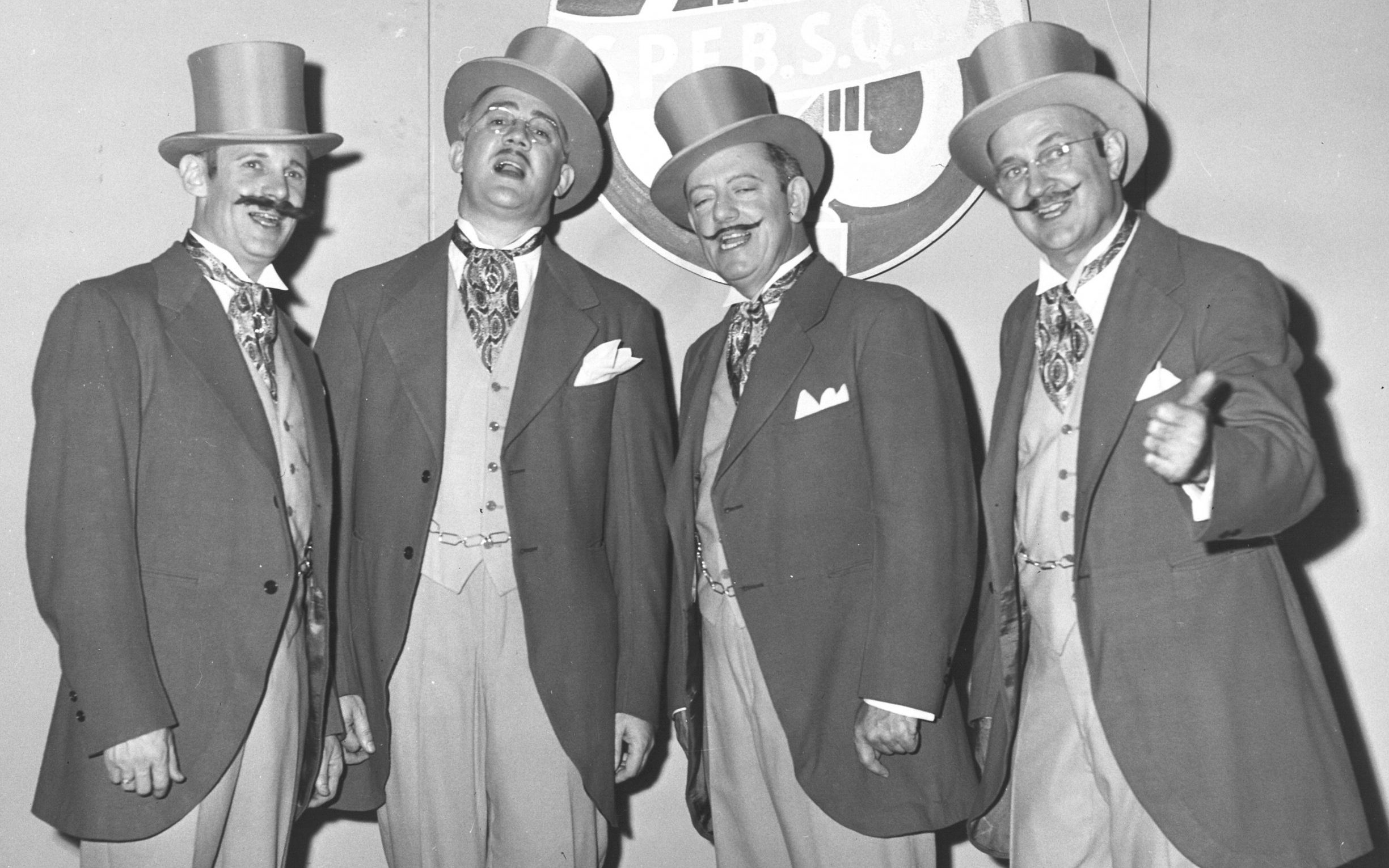
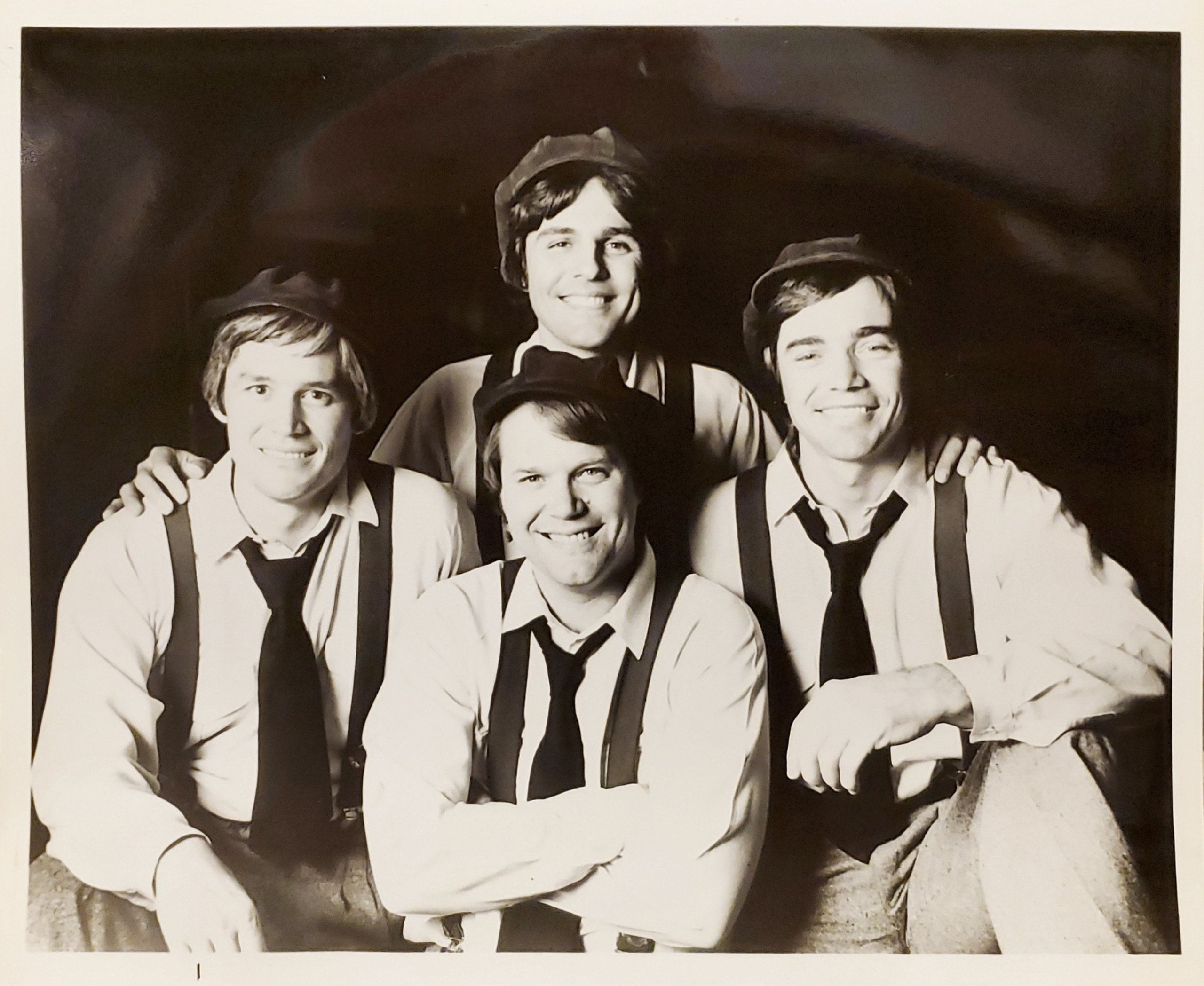
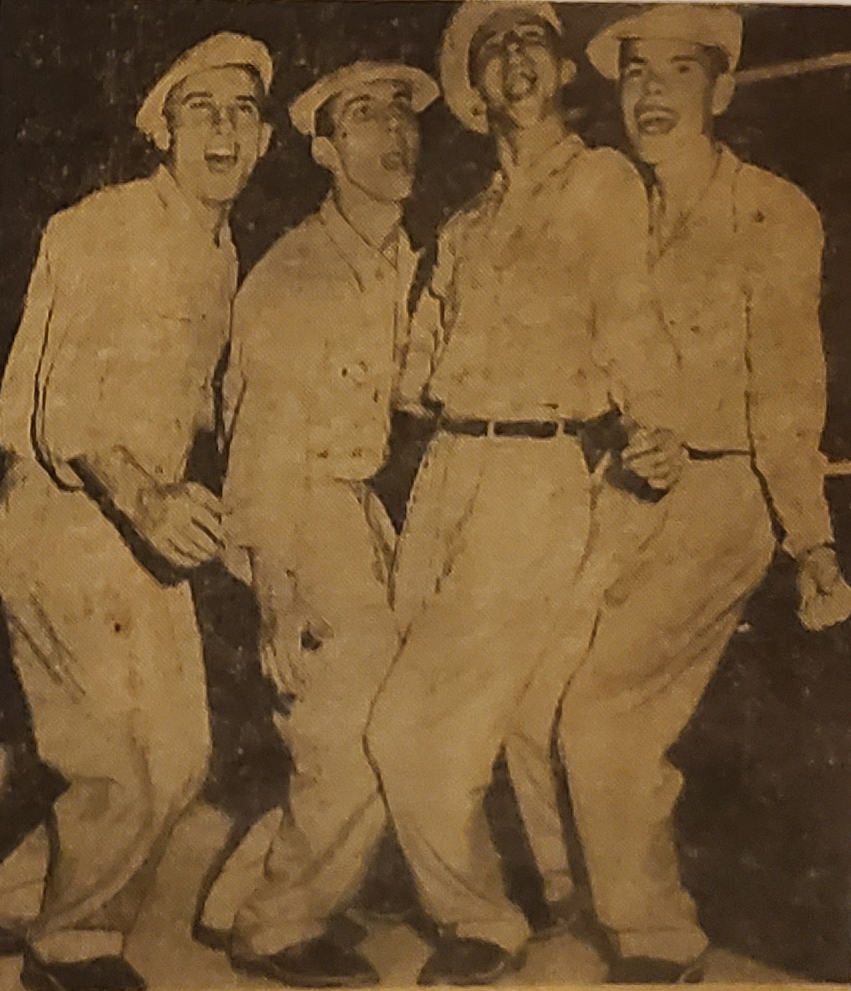
Thorne wanted to have a championship quartet more than anything else. He would invite prospective singers to dinner and audition them for dessert. One young man, Roy Frisby, who was trying to sell Frank on his bank’s services, made the best impression on lead and soon joined Herman Struble, tenor; Jimmy Doyle, baritone; and Frank singing bass. They became known as The Elastic Four and, after just six weeks of rehearsals, traveled to Grand Rapids for the 1942 National Contest and won the championship singing Frank’s special arrangements.
The Elastic Four set a new standard for Society quartets, devoting much of their time organizing new chapters and donating their services to “advance the cause.” Their 1942 records, from which all royalties went to the Society, have become classics in the early arrangement style for quartets.
When Thorne became president, he shared with the Society the executive talent he had long demonstrated in business. After the first World War in which he was a first sergeant in Artillery, he followed his profession as a landscape architect and helped lay out the famous Olympia Fields golf course in Chicago. But soon he went into sales work which took him out of Chicago to Grand Rapids, then Cleveland and returned him to Chicago to become National’s Sales Manager. At the time of his death Frank was vice-chairman of the board of NALCO and chairman of the board of VISCO Products, a chemical company in Houston, Texas.
As president of the Society, Thorne had an unusual grasp of chapter conditions through his work on various committees and by first-hand contacts as bass of the The Elastic Four, who criss-crossed the country many times during and after their championship year. Frank Thorne utilized proven business principles in administering the Society’s affairs through twenty committees demanded by the organization, including Song Arrangements. The greatest numerical expansion was during Thorne’s term when the Society burst out of its seams, adding 122 chapters in a single year! His singing and arranging overshadowed the fact that he had a variety of musical interests, playing the violin, baritone horn, piano, mandolin, cornet, accordion, and guitar.
Frank Thorne passed away at the age of 65 in his home in Riverside, Illinois on the night of October 26, 1956, but his accomplishments live on. Those accomplishments come to light each time an emcee at a contest says, “…representing the Frank Thorne Chapter…”