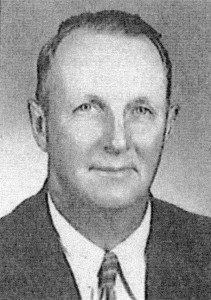
Glenn Howard was born in Moweaqua, Illinois in 1903 and came from a musical family. At an early age, Glenn harmonized with his brothers and at seventeen, Glenn, then of Decatur, Illinois, became interested in barbershop music. His first quartet was called the Decatur Close Harmony 4. In 1923, Glenn sang with The Oriole Quartet of Decatur, which consisted of Ted England, lead; Ernest Lukrafta, tenor; Floyd Mier, baritone; and Glenn Howard, bass. The quartet entertained for several years at the Illinois State Fair, at homecomings, picnics and at theaters in the cities such as Decatur, Springfield and Clinton.
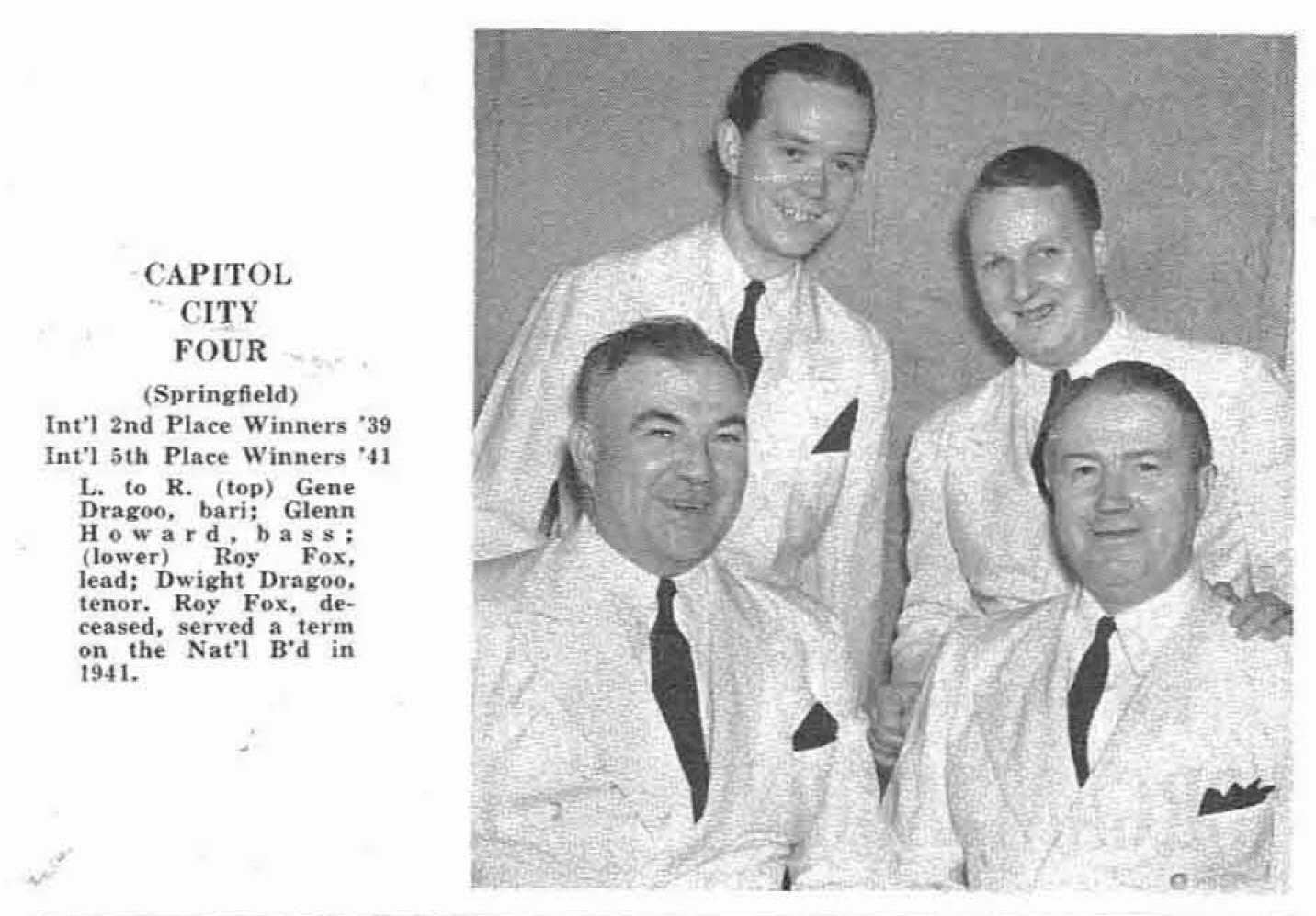
Back then, really good quartets had a “harmony man”, one who knew and could teach all four parts. They had no written arrangements and the learning was by ear. Therefore Glenn became the Oriole’s recognized harmony man. The Oriole Quartet continued for a few more years, with Glenn switching to the lead part, until Glenn formed a new quartet in Springfield, named The Capitol City Four in 1927. In this foursome, Roy Fox took lead, Fred Raney bass, Dwight Dragoo tenor and Glenn sang baritone.
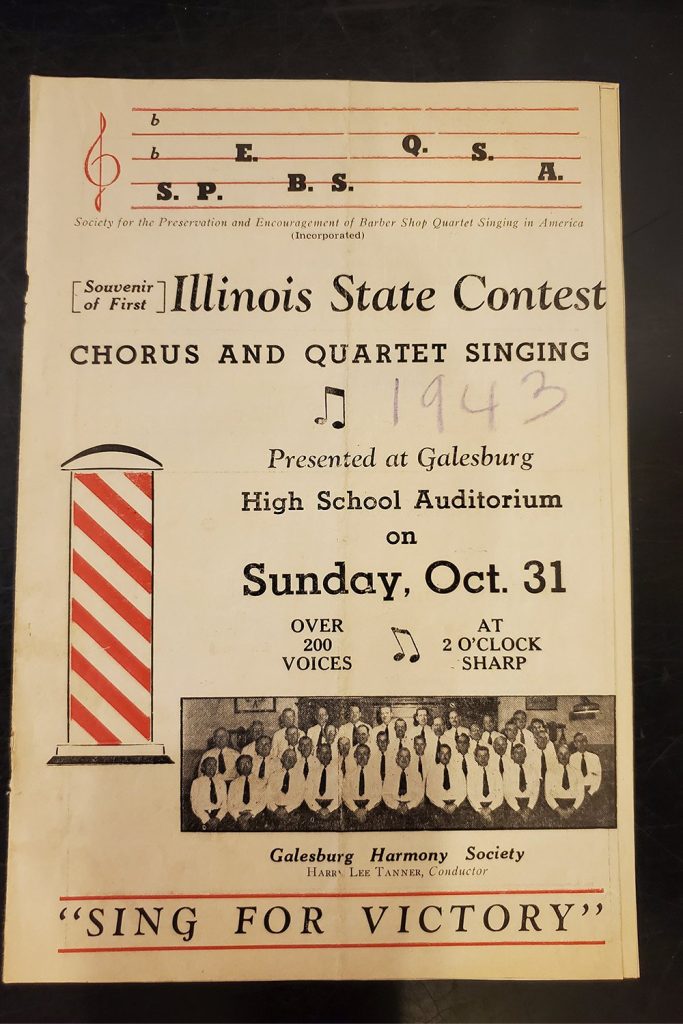
To be closer to the quartet, Glenn moved from Decatur to Springfield, taking a job in the sales department of Schulze Baking Co. The quartet would do hour-long radio shows every Sunday, advertising Schulze baked goods. In the 1930s, barbershop was extremely popular in central Illinois, with Springfield being a “hub.” Glenn conceived of an idea to bring area quartet men together and organized the Illinois Harmony Club in 1937 (one year BEFORE the Society was officially formed!) Membership was around 100 guys from Springfield, Peoria, Bloomington, Decatur, Taylorville, Canton, and Jacksonsville. Glenn served as the organization’s first president.
At the club’s second meeting, a busload of men from Chicago came down, which included Cy Perkins, Art Bielan, and Joe Murrin. It was at this meeting that they met Pete Buckley and the Misfits soon formed. Inspired barbershoppers returned to Chicago and set in motion the groundwork for the Chicago #1 Chapter. Eventually the club voted to put its membership in the newly created SPEBSQSA organization, and the fun was on!
The Society announced its first national contest to be held in Tulsa June 2 and 3, 1939. The Capitol City Four drove over a thousand miles to get there, intending to only listen and observe. On arrival at the headquarters hotel, however, they met O.C. Cash who asked for a song. They harmonized a couple of numbers and to their shock Cash said, “You’re in the contest.” The quartet did not even have costumes with them! The Capitol City Four did compete and something happened for the first and only time in barbershop history. The decision was so close that the judges called for a sing-off between the Bartlesville Barflies and The Capitol City Four, with the former taking the top honors in this very first of SPEBSQSA contests.
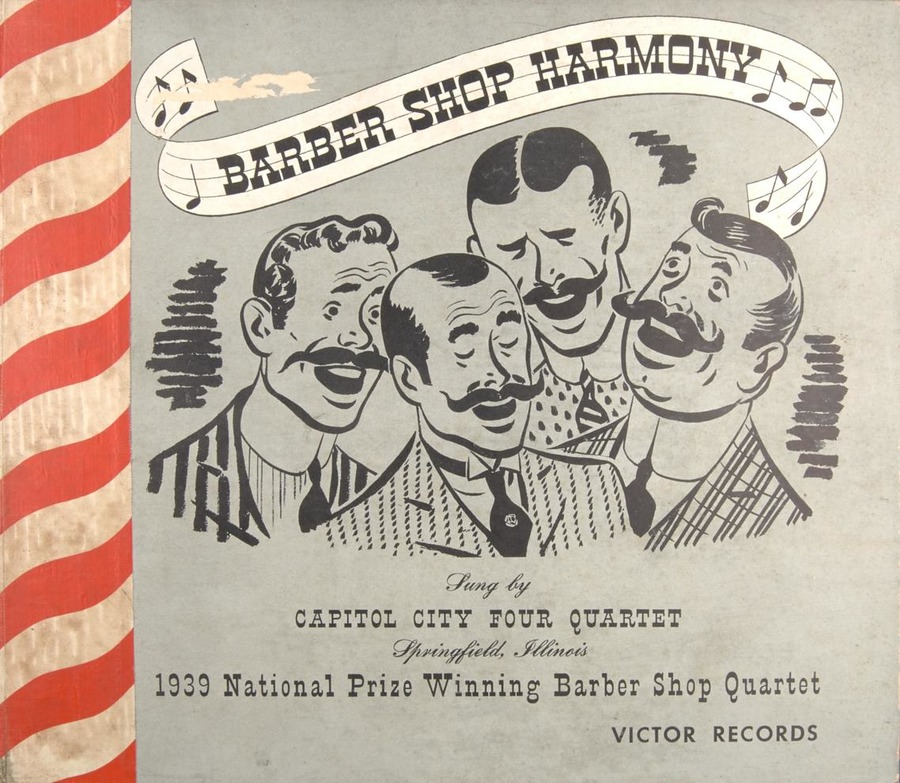
The next year, the quartet was able to sign a deal with RCA Victor in Chicago to make an album of records. The album was made with piano and organ accompaniment and became the first Society recording and is now a collector’s item.
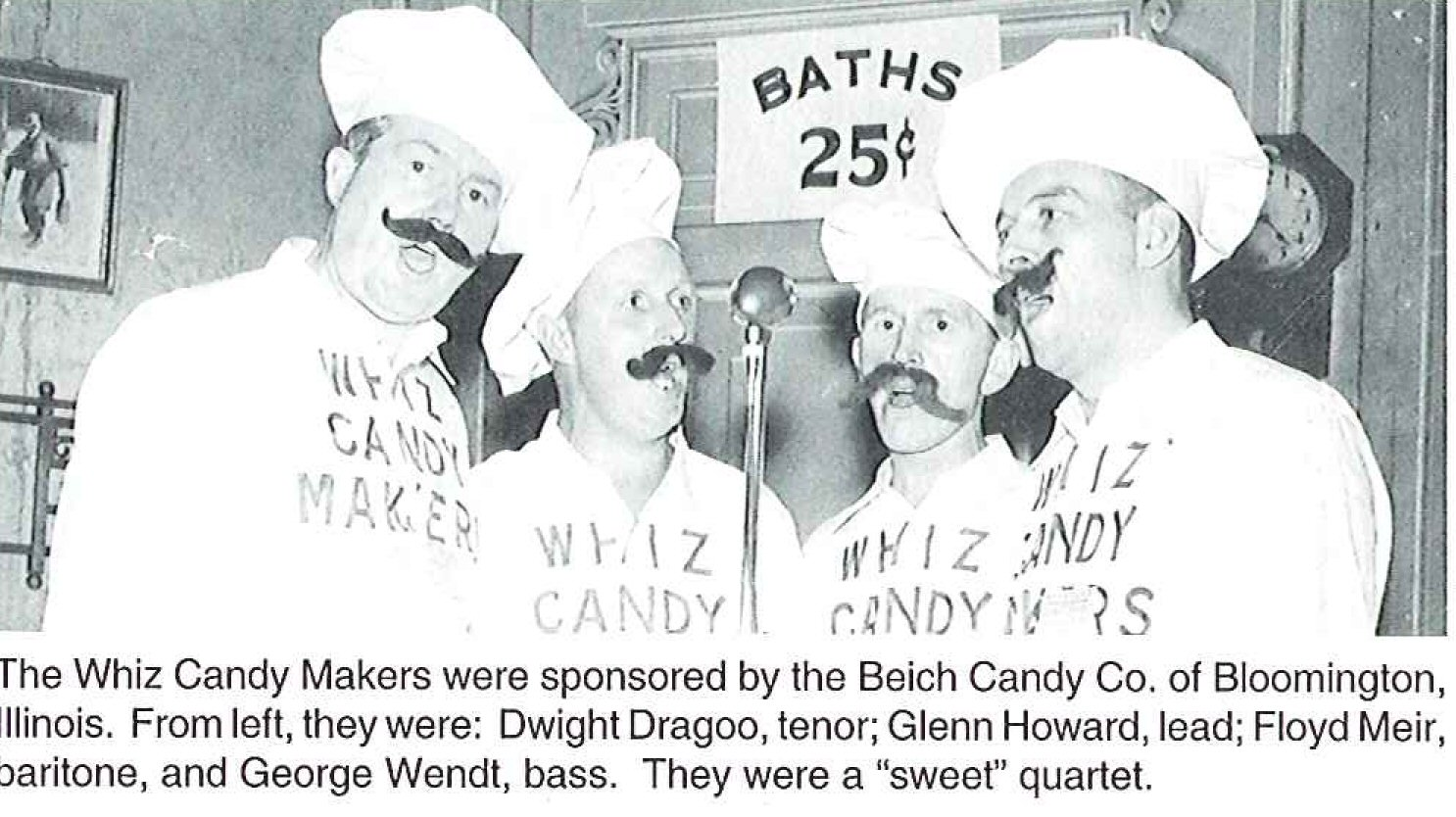
Glenn next sang in a quartet called The Plow City Four, and competed in New York City. In 1942, he organized the Whiz Candy Makers, sponsored by the Beich Candy Company of Bloomington, Illinois which also competed at the international level. Glenn sang with the quartet for three years, retiring in 1945 to become part of the audience. Glenn held the distinction of being the first man to finish in the finals singing three different voice parts and the only person to attend EVERY Society convention from 1939 until 1991. Glenn passed away in 1992 at the age of 89, but his legacy lives on in the district – at every fall convention, we present winners of the novice quartet contest with the “Glenn Howard Award.”